“What’s past is prologue” – Shakespeare, The Tempest
A BC political party emerges from the political wilderness, vanquishes the incumbent free enterprise alternative, comes close to winning power over the NDP, and is firmly established as the Official Opposition with a caucus made up of political neophytes. Just over a year later, the leader is out and a leadership convention is called.
That describes the events of the early 1990s when the BC Liberals led by Gordon Wilson stormed to Official Opposition after flirting with victory, and set aside the Social Credit dynasty which had governed for 36 of 39 years. By January 1993, Wilson had been pushed out by his caucus and a leadership convention was called, ultimately leading to the selection of Vancouver mayor Gordon Campbell, who led the BC Liberals for almost 18 years, including a decade as premier.
It also describes the events of this week. The man who led the BC Conservatives from obscurity to Official Opposition in the blink of an eye, John Rustad, was shown the door by a majority of his caucus, just one month after members of the party endorsed his leadership.
Like Gordon Wilson, John Rustad accomplished a miracle feat that no one thought possible. The circumstances were different, but at the heart of it, they were both relentless underdogs who tapped into a populist vein that was searching for a new alternative.
While in both cases, it’s unlikely either party would have succeeded without their leadership, it is also the case that both parties were ready for a change. The leader that got you there is not necessarily the leader to take you home – to victory.
Do the parallels between the parties stop there?
In 1993, Gordon Campbell was a political bright light who was nearing the end of this third term as mayor, only 45 years old, and was simultaneously chairing the Greater Vancouver regional district and serving as president of the Union of BC Municipalities. He clearly had the profile and the capacity to lead a provincial political party, and the members agreed, electing him with 65% of the vote at the leadership convention. Even then, it was tough slogging to pull together a winning coalition. He came close in 1996, winning the popular vote but losing the election by the all-important seat count. He spent eight years in opposition before his chance to govern arrived in 2001, setting the BC Liberals on a 16-year run in power.
BC Conservatives can’t wait that long. The NDP government is already in its eighth year, whereas Campbell’s BC Liberals were trying to take down a first-term NDP government. The Conservatives had their chance in 2024 and missed, in part due to their own strategic mistakes. There’s little tolerance for error now. They need to get leadership selection right to win the next election.
Whoever wins the leadership will need to put forward an approach and plan that consolidates the party’s existing support, and wins new ground in the Lower Mainland, specifically north of the Fraser River, in places like the Tri-Cities, Burnaby, Vancouver, and the North Shore.
Leaders don’t need to be exceptional at all things, but they do need to be a minimum of good in connecting with the voters through the media, at retail politics, raising money, and in articulating a coherent vision that unites supporters. They do, however, need to be exceptional when it comes to drive, being relentless, and acting as the engine and example that pushes the entire organization forward. And, as Rustad and Wilson learned, they need to hold the caucus together and harness their energies effectively.
This is the BC Conservatives’ one shot to get it right. If they don’t, there’s a party lurking in the wilderness, formerly known as the BC Liberal Party.
Past is prologue.
Mike McDonald is former chief of staff to Christy Clark and was involved in BC Liberal campaigns from 1986 to 2017. He co-hosts the Hotel Pacifico podcast on BC politics.
The floor crossings of two BC United MLAs to the BC Conservatives in the past few days mirror a phenomena taking place in public opinion polling. Since the rebrand of the BC Liberals to BC United in 2023, the polling trajectory has been steady and relentless in favour of the BC Conservatives. Former BC Liberal cabinet minister and current BC Conservative leader John Rustad has now attracted three former BC United MLAs to join him – Bruce Banman (crossed in 2023), Lorne Doerkson (May 31st), and Elenore Sturko (June 3), featured above.
Most of the time, the end is nigh for the politician that crosses. Some are pushed by desperation. Some are motivated by pique. Others for genuine policy and ideological reasons. Some are able to make the change stick, and some head straight for the electoral trash bin. And many leave behind broken relationships with former caucus colleagues that are hard or impossible to repair.
And sometimes, floor crossings herald the start of something new, and a fundamental realignment in party politics.
Floor crossing is older than Canada itself. Wikipedia informs us that, in 1866, an anti-Confederate politician in New Brunswick switched sides when he did not receive a desired cabinet post. We could go back to WWI when many Liberal MPs left Wilfrid Laurier and joined with the Unionist government under Robert Borden. Or to 1935 when British Columbia’s H.H. Stevens bolted the Conservative barn to form the Reconstructionist Party.
Réne Lévesque leaving the Quebec Liberal Party in the 1960s to form the Parti Québécois is one of the most momentous moves in Canadian political history. It led to the election of the first Péquiste government in 1976 and a referendum on sovereignty-association in 1980. Watch the documentary Champions to see Lévesque’s impact and his enduring rivalry with Pierre Trudeau.
Réne Lévesque: probably the most impactful floor-crossing in Canadian history (CBC)
In 1990, Lucien Bouchard spectacularly left the Mulroney government after the collapse of the Meech Lake accord, forming the Bloc Québécois and taking other Quebec PC and Liberal MPs with him, including Liberal MP Jean Lapierre. Bouchard led the Oui forces to the brink of victory in 1995, and shortly thereafter became Premier of Quebec.
The 1993 election saw the collapse of the Progressive Conservatives to two seats with Preston Manning’s Reform Party dominating Western Canada. After Jean Chrétien continually swept up in Ontario, Progressive Conservative Senator Gerry St. Germain was one of the first to attempt to unify the Conservative parties and changed his allegiance in the Senate from PC to become the first Canadian Alliance senator in 2000. Later, eleven Canadian Alliance MPs left caucus to sit as the “DRC” – Democratic Representative Caucus when they couldn’t get along with Alliance leader Stockwell Day, and included some political heavyweights like the first Reform MP ever elected, Deb Grey. The DRCs would morph into a coalition with Joe Clark’s (second-coming) PC caucus: the PC-DRC. Ultimately, most everyone got back together under the leadership of Stephen Harper after new PC leader Peter Mackay agreed to merge the PCs with Stephen Harper’s Alliance. Harper became the leader of the new Conservative Party and held Paul Martin to a minority in 2004 before winning his own minority in 2006. (Joe didn’t cross, he stayed PC until the end). The key point is that floor crossing influenced the course of events between 2000 and 2004.
In 2018, we saw Maxime Bernier, who lost the Conservative leadership to Andrew Scheer by a slim margin, exited the party and established the People’s Party. It caused a rearguard action that hampered Scheer’s Conservatives as they readied themselves to fight the Liberals in the 2019 election. For Bernier, the impact of this Xtreme floor crossing did not play out in terms of seats, but it has arguably forced a response by the Pierre Poilievre-led Conservatives to take back the political space he carved out for his fledgling party.
Some floor crossings reflect the ebb and flow of political tides. Scott Brison was elected as a Progressive Conservative, but left when that party merged with the Alliance to form the modern-day Conservative Party. Brison became a senior Liberal cabinet minister. One can argue that he represented a shift in Canadian politics where some Progressive Conservatives migrated to the Liberals. Many politicians, like Bob Rae and Ujjal Dosanjh, sat for one party, then came back to run for another party later, reflecting how they had migrated through the political spectrum.
Provincially, MLAs in both the Saskatchewan PCs and Liberals crossed the floor to the new Saskatchewan Party in 1997, which has governed the province since 2007. The PCs were extinguished and the Liberals are in the wilderness.
In 2002, Yukon NDP MLA Dennis Fentie left his party to join the Yukon Party. A month later he was leader and later that year he became Premier, serving until 2011.
The leader of the New Brunswick NDP from 2011-2017, Dominic Cardy, found himself as a New Brunswick PC MLA and cabinet minister in the government of Blaine Higgs. He now sits as an Independent MLAs after his second marriage with a political party ended acrimonously.
A candidate for the Liberal leadership in Newfoundland famously switched sides afterward. John Crosbie was a Minister of Finance under longtime Premier Joey Smallwood. Crosbie, and other younger Liberal MLAs, like Clyde Wells, chafed under Smallwood’s leadership and left Caucus, sitting as ‘Reform Liberals’. When Smallwood announced his retirement, Crosbie stepped up to run as Liberal leader. Smallwood came back to oppose him and won. Crosbie then left the Liberals to run as a Progressive Conservative, winning, and sitting in the new government of Frank Moores. He would go on to be elected federally in 1976, serve as Joe Clark’s Finance Minister, become a major contender for the 1983 PC national leadership, serve as a heavyweight in Brian Mulroney’s cabinet, and serve as Newfoundland’s Lieutenant-Governor. Old Liberal allies Crosbie and Wells would, years later, face off over the Meech Lake Accord in a constitutional showdown for the ages. Overall, quite a career for a party switcher!
Prior to 2023, BC has had three significant floor-crossings that led to a restructuring of political support bases. Leading up to the 1952 election, Conservative MLA WAC Bennett left that party and migrated toward to the Social Credit Party. The leaderless party won the plurality of seats in 1952 and Bennett became its leader (and, ultimately, Premier) after the election. Bennett governed for 20 years.
Seismic shift in BC politics when three senior Liberal MLAs join Bill Bennett and the Socreds in 1974 (Vancouver Sun)
Then, following his defeat in 1972, his son Bill Bennett, the new leader, recruited former Liberal leader and MLA Dr. Pat McGeer, Allan Williams, and Garde Gardom to join the Socreds, along with PC MLA Hugh Curtis. All four floor crossers would play major roles in Bennett’s government, which lasted 11 years. He also attracted former Liberal leadership candidate Bill Vander Zalm to run as a Socred in 1975 too.
Then, in the 1990s, there was a two-step process. First, four Social Credit MLAs left the former dynasty in ruins when they turned away from the fledgling BC Liberals under Gordon Campbell, to join the BC Reform Party in 1994. Their defection ultimately benefited the ruling NDP – Glen Clark would win a majority in 1996 while losing the popular vote. Campbell corralled the Reformers after 1996 and remaining Reform MLA Richard Neufeld crossed the floor to the BC Liberals, marking the formalization of a de facto coalition. Neufeld served as BC Liberal minister for seven years and the BC Liberals governed continuously for 16 years. In fact, Neufeld has the distinction of having been elected to the BC Legislature under three different labels – Socred, Reform, and BC Liberal – before being appointed to the Senate as a Conservative!
(A footnote to the 1975 example above is that Frank Calder, British Columbia’s first First Nations parliamentarian, lost his NDP nomination in the riding of Atlin leading up to the 1975 election. Having been first elected in 1949, Calder brought his winning ways to the Socreds and was elected yet again. Four years later, he lost by one vote to the NDP’s ‘Landslide’ Al Passarell. Passarell would later cross the floor from the NDP to the Socreds).
Some floor crossings backfire spectacularly. When WildRose MLAs, including leader Danielle Smith, defected to the Jim Prentice-led Progressive Conservatives in 2014, it boomeranged disastrously on the Prentice government. It looked too cute, too orchestrated – the overdog overdoing it. Prentice’s government were shockingly defeated by Rachel Notley’s NDP in 2015. Danielle Smith would bow out of provincial politics and spend time in the political wilderness before roaring back as leader of the United Conservatives in 2022.
Belinda Stronach’s floor crossing to the Liberals in 2005 helped save the minority Martin government for a time, but arguably galvanized Stephen Harper’s Conservatives in the forthcoming election in 2006.
Some leave and come home again. The most famous British example is Winston Churchill going Conservative-Liberal-Conservative. The aforementioned Jean Lapierre left the Liberals to join the Bloc Quebecois upon the election of Jean Chretien as Liberal leader. He returned to the Liberals under Paul Martin and was a senior cabinet minister in his government. Then there’s Joe Peschisolido who was a leading Young Liberal who drifted right and was elected as an Alliance MP then crossed the floor to the Liberals. After a stint out of politics, he was elected again as a Liberal MP in 2015 before his defeat in 2019. Gordon Wilson was Liberal leader in BC from 1987 to 1993. He left, with fellow MLA and wife Judi Tyabji, to form his own party, the PDA, and won his seat again in 1996 under that banner. He was recruited by NDP Premier Glen Clark to join the NDP cabinet in the late 1990s and then ran for the leadership of the NDP, unsuccessfully. Since 2001, he has been out of elected politics, but he did go ‘home’ again in 2013 when he made an intervention in that year’s election campaign in favour of BC Liberal Premier Christy Clark (who once worked for him) and against NDP Leader Adrian Dix (who once recruited him). Never dull in BC.
Some floor crossings weren’t meant to be. BC Liberal MLA John van Dongen left the BC Liberals over unresolvable disagreements. He joined the BC Conservatives, but within months, left them over unresolvable disagreements. Conservative MP Eve Adams defection to the Liberals on the eve of the 2015 election reeked of desperation. Her career was soon over, at least for now. A husband and wife both crossed the floor from the New Brunswick PCs to the Liberals in 2007, but by 2010 they were both out of politics. One-term West Vancouver-Sunshine Coast-Sea to Sky Country Liberal MP Blair Wilson got into some hot water and would eventually leave the Liberal Caucus to sit as an independent. Just before the 2008 election, he migrated to the Greens to become their first ever MP in Canada. He failed in his bid for re-election, as a Green.
Some cross and never look back, like Scott Brison and John Crosbie. Dr. Keith Martin was elected as a Reformer in 1993 and ran for the leadership of the Canadian Alliance. He crossed the floor to the Liberals in 2004 and served as a Liberal until 2011. David Kilgour was a longtime Progressive Conservative MP. Even though John Turner was his brother-in-law, he stayed as a PC, but after Turner left, Kilgour crossed to the Liberals and continued from there.
Some floor-crossers are peripatetic. Paul Hellyer was elected as a Liberal MP in 1949 and went on to be Minister of National Defence under Lester Pearson and a major contender for the leadership of the Liberals in 1968, placing second on the first ballot. He fell out with Pierre Trudeau the following year and tried to form his own party. He then crossed the floor to the PCs and in 1976, he ran for the leadership of that party. He would return to the Liberals in 1982 and ran unsuccessfully for a nomination in his old seat in 1988. He then formed another party, the Canada Action Party, and would try to merge it with the NDP.
There’s also the interesting case of Garth Turner. Elected as a Progressive Conservative MP in 1988 and ran for the leadership of the party in 1993. He lost his seat and returned as a Conservative MP in 2006. He defeated Liberal Gary Carr who had himself changed parties having been elected originally as a provincial Tory. Turner then fell afoul of the Conservatives, went independent, flirted with the Greens, and finally joined Stephane Dion’s Liberals before Lisa Raitt ended his political career in 2008.
Countless others have gone to sit as independents only to return later. Some are sent because they were naughty, others leave because they’re mad but come back once they’re happy. BC MLA Blair Lekstrom left caucus over the handling of the HST but came back after a leadership change. MLAs and MPs who never leave, and feel that they are team players, can often be annoyed and upset when those that leave are welcomed back. If handled properly, it can be seen as beneficial to the greater good that they return. Alternatively, it can be seen as rewarding bad behaviour.
Surrey MP Chuck Cadman was elected as a Reform MP and carried on as an Alliance MP, but prior to the 2004 election, he lost his nomination. He ran as an independent and won. In 2005, battling cancer, he was pivotal in keeping Paul Martin’s minority government in power during critical votes, against the wishes of his former colleagues. Liberal MP John Nunziata was bounced from the Liberal fold in 1996 after voting against Paul Martin’s budget. He showed them – he won re-election as an independent in 1997. They showed him – he lost to the Liberals in 2000. Gilles Bernier was a Progressive Conservative MP elected in the 1984 Mulroney sweep, but in 1993, the Rt. Hon. Kim Campbell would not approve his candidacy due to fraud charges (he was later acquitted). Bernier ran as an independent and won his seat. He was appointed Ambassador of Haiti by Prime Minister Chrétien. He managed to miss the 1993 PC wipeout and appointed ambassador. The benefits of going against the grain may have inspired his son, Maxime.
There’s Bill Casey who was elected three times a PC, and twice a Conservative before announcing he would not support the Harper government’s budget. He was bounced and ran as an Independent, winning 69% of the vote in 2008. A clear case of constituents agreeing with his reasons for opposing his party. He would resign his seat later, before returning in 2015 as a Liberal MP – making it four different ways he had been elected – PC, Conservative, Independent, and Liberal.
And, of course, there is Jody Wilson-Raybould. Considered a ‘star candidate’ in the 2015 campaign, and made Minister of Justice, JWR’s shocking confrontation with her then-colleagues over SNC Lavalin gripped Ottawa for months in early 2019, culminating in her departure from the Liberal Caucus. She won re-election as an Independent but did not stand again in 2021.
Another ‘star candidate’ from BC, David Emerson, shockingly defected to the Conservatives days after the 2006 federal election effectively marking the end of his career in electoral politics. The ink was barely dry on the ballots when he reversed course, causing much consternation among his former Liberal supporters. But it provided Stephen Harper with experience and depth in cabinet for two years and demoralized the Liberals, who sat out of power for nine years. Emerson, like JWR, did not have any roots in the Liberal Party. It is with some peril that political managers recruit candidates from outside the party – those candidates do not ‘owe’ anyone and tend to be untethered to party loyalties. In JWR’s case, the reasons for her leaving the Liberals were front page news for months. It was not unexpected that there would be a break-up (in fact, she was bounced from the Caucus). Emerson, on the other hand, gave no hint he was leaving. He was approached, he agreed. The voters that elected him, and party members that supported him, were caught unaware. There is the old argument – “I can get more done in government than Opposition”, which is a reason provided by Jenica Atwin.
Alberta PC MP Jack Horner crossed over to Pierre Trudeau’s Liberals in 1977, joining the Trudeau cabinet. There has rarely been a good time to be a federal Liberal in Alberta and this wasn’t one of them. His constituents did not reward him for his efforts in the subsequent election. In discussion with a grizzled old Prairie Liberal, he shuddered with Jack Horner flashbacks. The ‘betrayal’ of constituents by Horner was not unlike that felt by Emerson’s constituents in Vancouver-Kingsway. Around the time Horner ran into the arms of Pierre Trudeau, Winnipeg’s James Richardson, a member of PET’s cabinet, left the Liberal Caucus never to return, sitting as an independent. He tried to set up his own party then eventually helped found the Reform Party of Canada after he left elected life. My sources tell me his crossing was notable in that he told the Clerk, “I’m sitting over there from now on”. And off he went.
Many, many, many more floor crossings happen in the imaginations of political back roomers. There is always the threat of a disgruntled MLA or MP taking off. Most of the time, that representative is governed by some restraint. The voters elected him or her largely on the basis of their party label. Imagine you worked hard in support of your party only to find that the recipient of your hard work crossed no-man’s land to sit in enemy trenches? Many would-be floor-crossers have surely taken a step back when realizing they would have to explain their actions to the volunteers who backed them. Perhaps the most important floor crossings are the ones that don’t happen.
To be accepted by the voters, the conflict usually has to be real and substantive and/or that representative must have a lot of personal credibility. If it’s opportunistic, and imposed from the top, it’s not likely to go down well with the voters or the supporters of the sending and receiving party. Not many like a turncoat, especially when they weren’t part of the process.
What floor crossings can demonstrate is the dynamic state of our political system. In the ‘first past the post system’, parties are always in a state of constant movement. Parties continually search for a plurality of votes and seats, and attracting someone who represents a set of ideas or representative of a community of interest is a way to grow a party’s base. A floor crossing can give a tiny party a foothold in Parliament. Parties that fail to unify their members behind a common purpose can disintegrate, with floor crossings one such manifestation. Unlike the United States, Canadian parties can rise and fall (and rise again). There is much more fluidity. Real policy differences – such as Quebec independence – can lead to dramatic changes and fracture coalitions. Strong leadership glues coalitions together, unifying disparate elements. When it comes down to it, elected representatives are just people, unbound to their party label. They have the ability to exercise their free will.
BC MLAs Lorne Doerkson and Elenore Sturko have demonstrated their free will. Their decision to cross the floor will be hotly debated. BC Conservative leader John Rustad is attempting to use these floor crossings as a proof point that a fundamental realignment is taking shape in BC politics and hopes to ride it to power in one fell swoop, as WAC Bennett (a floor crosser himself) did in 1952 with the Social Credit Party. Whether Rustad’s decision to cross the floor to the BC Conservatives will be one of the most consequential floor crossings in BC history will be up to the voters to decide later this year.
As University of Manitoba Political Science professor Royce Koop puts it, “When an MP crosses the floor, it’s a beautiful reminder that in Canada we cast our votes for candidates, not parties”.
— with files from contributor Jay Denney
Catch up with Mike McDonald, Kate Hammer, and Geoff Meggs weekly on Hotel Pacifico, your Five Star podcast designation for B.C. politicos.
With just over five months from the start of the next provincial election, are we at a point where BC’s political landscape is about to be reshaped?
The BC Liberals won the popular vote six times in a row from 1996 to 2017 but that brand has been discarded. Its successor brand, BC United, has fragmented with two MLAs defecting to the upstart BC Conservatives, and many of its voters parked there too – the amount differs depending on which poll you’re looking at. Regardless of the exact numbers, it is crystal clear that there is a vote split. Electoral coalitions are tough to maintain, but the math is grim when they fall apart. To paraphrase Ben Franklin, it’s ultimately a question of “hanging together or hanging separately”.
What does history tell us?
The re-formulation of BC’s ‘free enterprise coalition’ – or as one astute political observer calls it the “Not NDP” coalition – has followed ‘big bang’ political events on four occasions over the past 83 years. Once a big bang happens, the voters are presented a revised option to challenge the dominant left-wing option, originally the Cooperative Commonwealth Federation (CCF) and, after 1961, the BC NDP.
The big bangs have taken place in a variety of ways – a deal between parties (1941), the voters choosing a surprising new direction (1952 and 1991), and coalition by migration when MLAs and partisans from weaker parties moved over to support the stronger party in order to remove a vote split (1975).
Let’s Make a Deal
In 1941, fresh after a disappointing election campaign where his majority government was reduced to a minority, Liberal Premier Duff Pattullo, who had led BC since 1933, wanted to carry on as usual. Concerned by the increasing strength of the left-wing Cooperative Commonwealth Federation (CCF), Pattullo’s cabinet and caucus colleagues wanted to join forces with the Conservatives and form a wartime coalition government. Pattullo dug in. Frustrated, Liberal cabinet ministers resigned, including Finance Minister John Hart. On December 2nd, 1941, at a special convention of almost 800 Liberal members held at the Aztec Room in the Hotel Georgia, both sides of the argument were heard over the course of a four-hour debate with those favouring coalition prevailing over Pattullo’s point of view, by a vote of 477-312. Pattullo resigned as party leader and declared, “You have given your verdict, which I accept. But you must remember you are now no longer Liberals – you are coalitionists.” He stepped down from the platform, waving to the crowd, saying, “Good-bye, boys and girls” and walked into the night. (see Robin Fisher’s, Duff Pattullo of British Columbia). John Hart was elected immediately by the Liberal rank and file to lead the party, and, within the week, was installed as the Coalition premier. Conservatives were brought into cabinet, with party leader, Pat Maitland, becoming Attorney-General. In the subsequent election, Liberals and Conservatives held joint nomination meetings where an equal number of members from each party were eligible to choose an agreed-upon coalition candidate at the riding level.
The Voters Choose a New Direction
In 1952, voters were tiring of the coalition parties. In fact, Liberals and Conservatives were tiring of each other. After two consecutive majority wins in 1945 and 1949, the coalition parties decided to resume hostilities and run their own candidates, with one key wrinkle – they hatched a plan intended to thwart the CCF by bringing forward a single transferable ballot where voters marked their first, second, and third choices. The thinking was that Liberal and Conservatives would gang up by being each other’s second choice thus denying the CCF a chance to otherwise win under the traditional ‘first past the post’ system. What they did not envision was the Social Credit Party, which governed Alberta but heretofore a non-factor in BC, becoming a plausible option for many voters. The Socreds trailed the CCF after the first count of ballots by a margin of 7 seats, but when second and third choices were counted, they edged ahead of the CCF, with 19 of 52 seats in the Legislature (the CCF had 18). The Socreds, who were actually led by an Albertan during the campaign, did not have an elected leader until after the campaign when W.A.C. Bennett (a former Conservative MLA who went Socred before the election) was chosen by the newbie caucus. W.A.C. then had to twist the arm of the Lieutenant-Governor to be invited to form a government. It worked out – he governed for 20 years on the strength of seven consecutive election wins, and shrewdly did away with the single transferable system after 1953.
In 1991, the voters would take matters into their own hands again and shake up the political landscape. They had had enough of the Social Credit Party, reducing the dynasty that had governed for 36 of the 39 previous years to only seven seats in the 69-seat Legislature. The BC Liberals literally rose from the ashes under leader Gordon Wilson to jump from zero to 17 seats and claim the Official Opposition, while the NDP steered its way to a majority government under Premier Mike Harcourt. The Liberals would metamorphosize in the years that followed. Wilson lost his grip on the leadership leading to a convention where the three Gordons faced off – Wilson, former leader Gordon Gibson, and Vancouver mayor Gordon Campbell. Campbell prevailed and set forth to rebuild the BC Liberals – then mainly a ‘liberal’ party – by attracting new blood, including ex-Socreds, Progressive Conservatives, and federal Reformers. It would take a decade. A close loss in 1996 (due to a vote split with remnants of the Socreds under the banner of Reform BC) was followed by an electoral landslide in 2001 when Campbell’s BC Liberals won 77 of 79 seats. The BC Liberal new era in government would run for 16 years to 2017 when a razor thin, combined NDP-Green majority ousted them in a confidence vote. John Horgan was propelled into power on the strength of a 189 vote NDP win over the BC Liberals in Courtenay-Comox, where the BC Conservative candidate had a coalition-killing 2,200 votes.
Coalition by migration
In 1972, the NDP, led by Dave Barrett, formed government for the first time, aided greatly by the rise of the BC Conservative Party which went from about zero to over 12% of the vote, creating a deadly vote split. In a Kelowna by-election to fill W.A.C. Bennett’s seat in 1973, the leader of the Conservatives, Derrill Warren, faced W.A.C’s son, Bill Bennett, the Socred candidate. Bennett the younger prevailed, dispensing with the Conservatives, soon became leader of his party, and ultimately attracted three Liberal MLAs (including former leader Pat McGeer) and one Conservative MLA to cross to him. The four floor crossers would become senior cabinet ministers after the election. Other key partisans, like former BC Liberal leadership candidate Bill Vander Zalm, jumped to Bill Bennett’s side. It wasn’t just as simple as that, though – the floor crossings followed months and months of public discussions of a ‘Unity Party’ by various opposition MLAs and advocacy by a third-party group – the Majority Movement – that pushed for a united front (Professor Gerry Kristiansen writes a great summary of events in BC Studies). Ultimately, the consolidation of seats under the Socreds sent the political ‘bat signal’ to free enterprise voters that the Social Credit banner had been rejuvenated, and they won the 1975 election decisively, and went on to govern for another 16 years. The Liberal and Conservative vote collapsed. The NDP vote was virtually unchanged in 1975 but they couldn’t defeat a unified opposition.
After the 1996 election when the BC Liberals won the popular vote but lost the election primarily due to a vote split with BC Reform, ‘Coalition by Migration‘ was effected to solidify support as Reform MLA Richard Neufeld crossed the floor to the BC Liberals (later to serve in cabinet) along with a past party president, and many grassroots members. BC Reformers were effectively wooed by the BC Liberals and room was made in the coalition tent for them. This process was repeated again in 2011-2013 era as Christy Clark moved to shore up the BC Liberal coalition by bringing key federal Conservative leaders onside to head off a BC Conservative comeback, convening ‘Free Enterprise Friday’ at its party convention, and notably recruiting former BC Conservative by-election candidate John Martin to run as a BC Liberal in the 2013 general election.
Fast forward to 2024.
We’re due for a Big Bang, whether that’s before or after the October election.
Will the parties hold their ground and have the voters choose their destiny for them? Will one of the opposition parties conclusively pull away from the other and turn the election into a two-way race or will they hold each other back and pick up the pieces afterward? As the 1991 example showed, it took a decade for a ‘free enterprise’ alternative to return to power – winning seats is one thing, but, depending on the scenario, the learning curve of brand new MLAs with no legislative experience is quite another. Just because a new option prevails doesn’t mean it’s going to govern anytime soon. It must still have the ability to appeal to more than 40% of the electorate, which is what successful coalitions have been able to do by attracting a broad spectrum of voters.
Alternatively, will the action take place pre-election, whether that’s a brokered deal that includes joint nomination meetings and agreed-upon candidates, similar to 1941 scenario, or party insiders stampeding one way or another as was the case in 1975? And how would the voters react to that? Would they be turned off by backroom maneuvers or energized that there may be a real horse race?
We’ll see. As Mark Twain said, “History never repeats itself but it often rhymes.”
Catch up with Mike McDonald, Kate Hammer, and Geoff Meggs weekly on Hotel Pacifico, your Five Star podcast designation for B.C. politicos.
Thirty years ago, on May 5, 1993, a historically-significant event in BC politics took place.
In front of over 600 supporters at the Hotel Vancouver ballroom, the Mayor of Vancouver bounded onto the stage, and announced he was seeking the leadership of the BC Liberal Party.
At 45 years old, Gordon Campbell was already doing in local government politics what no one had ever done, nor will likely ever do again – he was Mayor of Vancouver, chair of the regional district, and president of the Union of BC Municipalities (UBCM) at the same time. He had been mayor for almost seven years but the boundaries of local government could not contain him. He had restless energy for a new challenge, and this meant a challenge like no other.
Taking a step back, between 1952 and 1991, the Social Credit Party had governed for all but three of 39 years. When Campbell was elected mayor in 1986, the Socreds were enjoying a resurgence with leader Bill Vander Zalm, who triumphed at the polls a month earlier. However, the aging Socreds were not a great fit with the City of Vancouver nor were they a great fit with a ‘new era’ politician like Campbell. Elected as mayor in 1986, he had been careful to live up to the “Non-Partisan” aspect of the Vancouver NPA. While it was clear the NPA was not the left-wing party, it was a centrist blend of ‘free enterprisers’ – liberals, conservatives, and those simply there for good government. And as the Vander Zalm government imploded in the late 1980s, he was wise to steer clear of provincial politics.
And then in the 1991 B.C. election, the heretofore also-ran BC Liberals blew up the provincial political landscape.
During the TV debate, BC Liberal Leader Gordon Wilson caught lightning in a bottle, precipitating the collapse of the tired Socreds and a fundamental realignment of BC’s political landscape. Mike Harcourt’s new NDP government – the first NDP government since 1975 – was greeted unexpectedly by an even newer BC Liberal opposition.
Leaping from zero to 17 members, the BC Liberals were inexperienced in almost all respects. Wilson, who had been a tenacious one-man band out in the political wilderness, struggled as the leader after the election. The House Leader left caucus to sit as an Independent. The Caucus was a hotbed of unrest. By January of 1993, under huge political pressure, Wilson acceded to a leadership convention.
Wilson instantly sought to regain his leadership. Former BC Liberal leader Gordon Gibson put his name forward. Gibson had been the lone BC Liberal in the Legislature from 1975-1979 before the party slipped into sleep mode for 12 years, and had a family history in the party that led back to the 1950s with his father Gordon Gibson Sr. (‘Bull of the Woods‘) serving prominently as BC Liberal MLA and thorn in the side of the Socreds.
All eyes then turned to yet another Gordon, Mayor Campbell. An opening lay before him, but it was not as obvious as it seemed; Campbell was not a member of the BC Liberal Party. Many weren’t sure what he was in terms of partisan labels, though he was seen as a business-oriented, budget-conscious centrist that was in tune with the times.
But leading the BC Liberals? They had been in the political cold until only recently. The BC Liberal brand dated back to 1903, to the advent of party politics in British Columbia. BC Liberals had not governed since being vanquished by the Socreds in 1952 , its elected remnants had been decimated by floor-crossing MLAs in the 1970s, and the party had been further weighed down by its affiliation with the very unpopular P.E. Trudeau federal Liberal government in the late 1970s and early 1980s. Wilson picked up the leadership in 1987 after it had recently improved to 7% of the popular vote, but had no seats. Under his leadership, the party split from the federal wing before the election in 1991 and became an independent provincial party, a pivotal moment, and a precondition of its breakthrough and sustained success.
Campbell contemplated taking on this brand and the shell of an organization. It had about 3,000 members, weak riding associations, an eclectic group of MLAs who were surprised to get elected, and the continued existence of the Social Credit Party on its right flank. In order to be successful, he would need to modernize the BC Liberal Party, demonstrate its independence from the federal Liberals, and make it a vehicle for ‘free enterprise’ in order to wrest power from Mike Harcourt’s NDP government.
By 1993, there was a hunger already for change among non-NDP forces. Mike Harcourt’s NDP government was already taking on water. ‘Tax and spend’ budgets had angered voters in Campbell’s orbit. On April 5, 1993, Campbell headlined a tax revolt rally at Oakridge Mall that drew over 4,000 angry taxpayers. The issue was the NDP’s move to restrict the homeowner grant. It set off a brushfire. The Oakridge rally seemed to make the idea of an anti-NDP provincial groundswell more real. Memories of Dave Barrett’s one-and-done NDP government were fresh in the minds of seasoned politicos.
Campbell faced a fork in the road – actually more like a trident. There were three paths: (1) Lead the upstart BC Liberals; (2) Revive the Socreds which had a deeper organization and governing experience; or (3) Form a new free enterprise movement and bring the two other parties together.
All options had flaws.
The 1993 Socreds had a deeply damaged brand, lacked an urban sensibility, and were of another generation. A new party would be greeted with stiff resistance by both parties, and without any seats, would be on the outside looking in with no guarantees of gaining a foothold. Despite some brand baggage, at least the federal Liberals had been out of power for nine years, and antipathies toward the word ‘Liberal’ had faded. The BC Liberals had a relatively fresh sheet with the voters and were the Official Opposition, keeping them front and centre in Question Period for the foreseeable future.
Thus, sometime in April 1993, Campbell decided to take the plunge and make it a race of the ‘Three Gordons’ (and a Linda, Wilf, Allan, and Charles). He had heard from many BC Liberals that pledged their support, mitigating fears that it would be perceived as a hostile takeover. In fact, as a non-member, it was very important for Campbell to be invited, even drafted to run, and not press too hard appearing to want the leadership. Party members came to him throughout April. Wilson, while admired for his breakthrough, never had a deep organization behind him and seemed even weaker now. Gibson was respected for his thought leadership and policy focus, but had been out of elected politics for 14 years and was not as well known in the general public.
Campbell made it clear from the outset that he was running to be the leader of the BC Liberal Party and not looking to broker a coalition of parties. He stated his view to the media, shaped by his experience in Vancouver, when he launched his leadership bid:
“I don’t think it’s a question of parties. Frankly I think that is obsolete thinking. It is not bringing parties together; it is bringing people together that will make a difference. I am not trying to lead the Social Credit party. I am trying to lead the Liberal party. I am not in favor of the Socred way. That would be a step backward. I am not seeking a coalition.”
Campbell was newer and fresh. He had no provincial political baggage, though much was made of his business community ‘Howe Street’ connections, similar to a federal political mantra of the time – ‘Bay Street vs Main Street’ – pushed by the federal NDP. The attack sought to convey that he was more interested in business elites than regular people. The BC NDP picked its theme early and hammered it for years, not to mention Campbell’s leadership rivals playing it up.
Four MLAs from the 17-member caucus backed him from the beginning along with a cross-section of active BC Liberal members, federal Liberals, some Progressive Conservatives, but the added oomph came from two places – the NPA network in Vancouver, a highly effective political machine at that time, and from mayors and councillors around BC that he had met through his service with the UBCM. Campbell had built up friendships around the province that would belie charges that his support was too Vancouver-centric.
From the Hotel Vancouver, he headed straight to the airport and flew to Kamloops for an evening event on day one. Day two would see him hit the road to Williams Lake then onto Prince George. It was felt he needed to get out of Vancouver to campaign as soon as possible, to send a message. A campaign office was procured at City Square Mall, across the street from City Hall. The grande dame of Liberals in BC, May Brown, chaired his campaign, along with young BC Liberal MLA Gary Collins, who saw the need for the caucus and the party to evolve its leadership. From there, it was four months of relentless travel to sink his roots deeper in the party, and around the province. The NPA brought membership strength in the city, and the municipal network put meat on the bones outside Vancouver.
One odd aspect of this leadership process was that the rules had not been confirmed at the outset. There were existing rules, but the party executive expressed a strong preference to move to a universal ballot, instead of a delegated convention. In addition, it favoured an unweighted ‘one member one vote system’. This basically meant there was one ballot box; whoever got the most absolute votes province-wide would win. However, in order to effect these changes, there needed to be a party convention to approve the rules, with two-thirds support required.
On July 31st, BC Liberals convened at the Hyatt Regency Hotel in Vancouver. The Campbell campaign favoured the executive’s recommendation for one member one vote, and the Gibson campaign advocated for regionally-weighted results, so that every riding was equal.
One of 689 voting cards raised in the air
The Campbell campaign was not too concerned about regional weighting – it could win either way. It favoured one member, one vote, in part, to support the party recommendation, but also from a practical perspective of campaigning, it was very focused on membership sales wherever they could be found. Regional weighting would have shifted the focus to gaming out 75 micro-campaigns. The Gibson campaign felt regional weighting was the right way to go for its interests, given Campbell’s strength in the City, and its own regional perspective (and it should be noted that the BC Liberals and other parties now use regional weighting).
Next came what turned out to be a defining moment in the leadership race. There was a heated debate on the convention floor with a long lineup of speakers. Campbell and Gibson supporters were bedecked in t-shirts, with floor captains directing traffic. Campbell delegates were instructed to stay in place and not even consider leaving the room. At last, voting cards were raised, and a manual count tabulated. The vote was 460-229 in favour of the executive’s recommendation for one member, one vote (province-wide).
As it needed two-thirds support, this meant it passed – by one vote.
The crowd was stunned, then jubilation erupted among the Campbell delegates while Gibson delegates despaired. The chair of the meeting paused, then proceeded to the next item. No immediate demand for a recount was heard. The rules were set. Campbell’s team had demonstrated considerable organizational strength at the convention and it carried through to the leadership vote.
By the time the vote was held on September 11, it was fairly clear Campbell would win. The membership of the party had grown to over 15,000, much of it driven by Campbell’s campaign. By that point, it was only a question of by how much, and whether it would need more than one ballot.
This was a real issue facing Campbell’s team – what if it did need a second ballot? This was pre-Internet. The party was using a technology called “TeleVote” where members received a code in the mail and voted their first ballot choice by phone, then waited for the results by listening to the radio or trying to find it on TV. It was not a preferential ballot, as is used today in most leadership elections.
Had it gone to a second ballot, turnout likely would have dropped off a cliff. But it didn’t get that far. Campbell won the Battle of the Three Gordons decisively with 63% of the vote on the first ballot, with Gibson in second, and Wilson well back in third.
While the leadership race had been hard work, Campbell faced little resistance. He had a blank canvas. He could redefine what it meant to be a BC Liberal, and he did. The BC Liberals were shaping up to be a real contender, led by a four-time winner from the province’s largest city. But what he had just gone through was dwarfed by his challenge going forward.
While there was goodwill from most in his caucus, and a gem in Fred Gingell who led the caucus in the interim, it was not Campbell’s team and it would take a while to learn to work together (Wilson, and his wife Judi Tyabji, left caucus immediately after the leadership vote to start a new party). Campbell matched up well against Harcourt, but it was NDP enforcer Glen Clark who would inflict political damage with relentless attacks and emerge as his main rival. Campbell had to raise money, find his way into the Legislature, win over old Socreds and Conservatives resistant to the BC Liberal brand, learn the cadence of provincial politics, recruit a campaign team, and help a 30-year old country lawyer in Matsqui take on the most experienced campaigner in British Columbia, and new leader of the Socreds, Grace McCarthy, in a titanic byelection battle.
The rest is history, as they say. Campbell encountered many obstacles and suffered setbacks. Winning the popular vote in 1996, but losing the election. It was a bitter pill to swallow, but he decided to gut it out, spending almost eight long, and, sometimes, miserable years in opposition. He triumphed in a 77-2 electoral landslide in 2001 and launched the ‘New Era for British Columbia’, the slogan of his winning campaign. The BC Liberal franchise from Campbell to Christy Clark would win the popular vote six consecutive times between 1996 and 2017 and earned majorities four consecutive times.
Over time, the makeup of the BC Liberals changed, but from the time of his leadership win, Liberals who had fled the Vander Zalm Socreds or had never warmed up to them in the first place, were at the heart of contending for power, building a party where everyone on the non-NDP side of the ledger were welcomed. Candidates and staff with Liberal pedigrees, and liberal sensibilities, took key roles, alongside those with Socred, Progressive Conservative pedigrees, and conservative sensibilities. And many had no evident federal leanings at all.
That new BC Liberal identity was being formed. It was a vehicle that occupied the centre/centre-right of the political spectrum, united mainly by economic and fiscal policy, and represented a foundation from which Campbell could move. While a formal coalition of parties never did happen, a de facto coming together of ‘free enterprise’ voters took place.
The new definition of BC Liberal would begin to mean something – not to everyone’s liking, and especially not to some die-hard Liberals who had campaigned for Wilson or were resistant to Campbell’s policy approach, but it was being legitimized to a plurality of voters in urban and rural B.C. The party left behind some of the idealists, and some unwilling to make necessary compromises to grow the party, and attracted the pragmatists and those wanting to be part of building something new. He was careful not to get drawn into federal politics, following an instinct that served him well with the NPA. He recruited a new generation of provincial politicians from all stripes. The class of 1996 was young, with the mainstream in their 30s and 40s, and he led them to government five years later.
Turning away from the Social Credit Party and building, essentially, a new party under the BC Liberal brand, under a young but experienced leader, ultimately was a winning model. The Party gained a new life in 1987 when Gordon Wilson took it on and delivered the miracle breakthrough. Campbell benefited from the shakeup in the landscape, and proved that he could take it to the next step, albeit later than he hoped. Christy Clark extended the life of the BC Liberal government for six additional years until 2017.
What if? What if Campbell had not run for the BC Liberal leadership? The landscape would be very different today. Perhaps Gordon Gibson would have led the party from 1993 on; perhaps new Socred leader Grace McCarthy would have won the Matsqui by-election and the Socreds would have hung in there longer. Different circumstances may have kept Campbell out of provincial politics indefinitely or forever. Who knows? It’s hard to imagine Campbell being in any role in provincial politics other than leader.
Today, the BC Liberal brand has been relegated to the dustbin in favour of BC United. Lessons can be learned from the BC Liberal rise to power, how it aligned with a new generation in politics, and the struggle to win.
Looking back, the BC Liberals had a remarkable 30-year period from 1987 to 2017. For almost 18 years during that span, Gordon Campbell led the party, serving close to a decade as premier. And it all started at the Hotel Vancouver on May 5th, 1993.
Mike McDonald served under all three BC Liberal leaders who led the party from 1987 – 2017. He worked for Gordon Campbell from 1992-2003, as Special Assistant in the Mayor’s Office, Campaign Director in the 1993 leadership campaign, and in various other roles in the party, Premier’s Office, and Government Caucus. He was Chief of Staff to Premier Christy Clark.
The last few months have provided fresh case studies about political parties in the parliamentary system that change leaders while governing.
Most leaders come to power whilst their party is in opposition. Lose an election and the pressure mounts for change. Why leave when you’re governing?
But sometimes, heads of government are forced out when their re-election prospects look bleak and/or they have lost the trust and confidence of the grassroots of their party.
This was the case recently in the United Kingdom and in the Province of Alberta.
And sometimes leaders leave for health reasons – as is the case in the Province of British Columbia.
In all of these cases, the selection of the new leader, and, therefore, new head of government, is in the hands of the members of the respective political parties – a small percentage of the overall population. The general public just sits back and watches while a new prime minister or premier emerges – someone you may have never expected to be leading when you voted in the previous general election.
It’s actually more inclusive than before
Back in the ‘old days’, leadership election was the purview of party caucuses. Win the support of your colleagues and you become leader.
Then, in Canada, parties moved toward delegated conventions. Each riding would elect delegates from among its members. Those delegates would congregate in a central place to hear speeches and vote. The conventions would often take multiple ballots where delegates voted each time, after the bottom candidate was knocked out and others chose to pack it in. Many conventions were exciting from a participant and viewer standpoint. Delegated convention, on a national scale, could include anywhere from 3,000 to 5,000 voters.
As exciting as they may have been, many clamoured for change. The delegated conventions were backroom affairs where party insiders controlled the process. Members back home watched on TV while the 8 or 12 delegates from their riding decided on leadership election at the exciting convention. Mind you, those delegates were probably elected with a mandate to support a particular candidate, but the folks back home were on the couch while the delegates were wined and dined and had the influence on the convention floor.
The calls for “one member – one vote” began in the 1990s in Canada and most parties have a form of that for leadership election today. In Canada, there are variations between weighted and unweighted. Weighted means each riding is basically equally (as is the case in delegated conventions). Regardless of whether you have 1,000 members or 100 members, you still have the same clout. In unweighted, it’s one big bucket of votes.
As a result of one member-one vote, more people than ever have a direct vote in leadership elections in the parliamentary system. In the UK Conservative leadership election, 141,725 voted in the race that elected Liz Truss. In Alberta, 84,593 UCP members voted in the leadership elections that produced Danielle Smith. In the federal Conservative leadership in 2022, over 430,000 members voted – a Canadian record.
However, in spite of this huge increase in participation in internal leadership selection, it is still a far cry from the mandate one receives in a general election. In the previous general election, the UK Conservatives received almost 14 million votes – about 100X that voted in the 2022 leadership process. The Alberta UCP received over 1 million votes in the previous election, but less than 9% of that total participated in their leadership process.
And BC? In 2020, John Horgan’s NDP received almost 900,000 votes, but at the time Horgan announced his plans to retire earlier this summer, it has been publicly reported that the party’s membership base had shrunk to as low as 11,000, representing just over 1% of the voters that elected them.
The pitfalls of one member – one vote
One of the reasons or theories in support of one member – one vote is that it more closely mirrors a general election than delegated conventions or caucus selection. Include more people and you are more likely to end up with a leader who has broader appeal, so the theory went.
In my own experience, that was probably the case in 2011 when Christy Clark was elected leader of the BC Liberal Party. She had broader public appeal than other contenders, but was not as strong among party insiders and certainly would not have won a vote held just in caucus.
Plus, weird things can happen at delegated convention where a dark horse ‘comes up the middle’. Unexpected leaders like Joe Clark (PC 1976), Bob Skelly (BC NDP 1984), and Stephane Dion (LPC 2006) became leader in large part because they were less objectionable and/or over-performed at the convention, but ultimately were not very successful in rallying their party or resonating with the public.
While one member-one vote brings out the party’s membership base, that is no guarantee of mirroring the party’s voter base – or the voters that the party needs to win the next election. The membership base can be more extreme, hard line, or issue obsessed than regular voters.
In Alberta, the appetite for change was already strong among grassroots members – 48% of whom voted to replace Premier Jason Kenney in May 2022. This reflected Kenney’s lack of popularity in the polls. When it came time to replace him, party members opted to go outside the caucus for a leader with views in stark opposition to Kenney. Danielle Smith is a known commodity in Alberta, and had served as Opposition Leader, yet some of her policies and positions are very different than those the UCP campaigned on in 2019. In terms of the ‘red meat’ (e.g., Sovereignty Act, appeals to the unvaccinated) she threw out to UCP members in order to win, will that be appetizing to the broader UCP voter base and swing voters?
In the UK, Liz Truss emerged as Conservative leader once members got their say. In their process, the caucus narrows down the choices to two then the members decide. Truss was third choice on the first caucus ballot but made the top two by the 5th ballot. She won the membership vote handily demonstrating how she resonated more with party grassroots than Westminster colleagues. She set forth on implementing her promises and caused a firestorm when markets reacted badly and stability was threatened. Her poll numbers crashed. After 37 days, she has already sacked her finance minister while a daily newspaper has a live feedcomparing her political lifespan to a head of lettuce. The UK Conservative members clearly backed her policies but public pressure has forced her to back down. Are UK Conservative members that far off the political mainstream?
In BC, there is a different issue. The NDP has not yet elected its successor, but it is facing a math problem. The membership base was very low when the leadership process started. While the UK Conservatives freeze their membership list to prevent new members from joining when a leadership race is called, Canadian political parties tend to have a period of time for membership sign-ups to spark renewal and generate excitement and fundraising. Such is the case with the BC NDP which allowed a period of about 8-10 weeks for sign-ups. Leading contender David Eby managed to sew up the vast majority of caucus, earning 48 endorsements of the 57-member caucus. It seemed like a done deal. However, MLAs only get one vote, just like anyone else who joins the party. With potential MLA contenders declining to run, Eby appeared to have a clear path to acclamation. Then along came a challenger.
Anjali Appadurai is writing the textbook case of a challenger who has no elected experience, no support from caucus, scant support from party insiders, but is able to fully leverage the rules to her advantage. A weak membership base made the party ripe for the picking. The BC Liberal opposition in BC recently chose a leader with over 30,000 members voting. Appadurai would have sized up the NDP situation and concluded that 5,000 to 10,000 new members would give her a chance to win. And as an experienced organizer, with strong links to environmental groups, she knew where to find them.
That’s fair cricket, as far as I’m concerned. The rules allow for new members. Leaving aside the political side show of ‘Green Party hostile takeover’ (a silly premise) and allegations of paid-for members, this situation was allowed to happen through complacency. David Eby, should he prevail as leader, will have done so with probably the weakest membership sign-up in a Canadian one member-one vote election, ever. By all accounts, he brought in little, relying on the existing small membership base, where he apparently has a strong following, and caucus support.
Albeit a former NDP federal candidate, Appadurai is a true outsider who opposes many of the policies of the government she wants to lead. Her policies would be a major change of course. And this could happen because she signed up maybe 5,000 to 10,000 members and had some support from the existing small base of members? An Appadurai government would be nothing short of a coup in Canada’s third-largest province, a political coup obviously, but one that the general public never could have anticipated. To compare to Alberta, Appadurai’s policies would be more starkly different than her predecessor and she is much less-known than Danielle Smith, not to mention not having any elected experience. It would be unfair to voters, who voted for John Horgan and his policies, to end up with the political whiplash offered by an Appadurai government. Frankly, it’s ridiculous that it even got this far.
The True Election
At the end of the day, there is actually only one real leadership election. The Crown decides.
By convention, the King or, in Canada, the Governor-General or Lieutenant-Governor, accepts the governing party’s choice of leader. However, that is based on a demonstration by the incoming leader that he or she can command confidence.
In the case of Liz Truss and Danielle Smith, they have passed that test. While espousing policies that may be off the mainstream for voters and even members in their own party, they are still, for now, seen to be able to command a majority in parliament. When Christy Clark was elected leader of the BC Liberal Party in 2011, she only had one MLA endorse her. But her history as a cabinet minister, deep ties in the party, and 1:1 diplomacy with the caucus assured her of confidence when she arrived at Government House. This is now the question for the BC NDP.
Sure, they may bounce Appadurai from the race on some grounds. The cut-to-the chase reality, however, is that she surely does not have any chance of commanding confidence in the Legislature. It is hard to believe that 44 of the 57 NDP MLAs would turn the keys over to her given her policy statements and lack of experience. In that case, she wouldn’t make it to Government House. She would be a leader of a political party, not the leader of its parliamentary wing. They are two distinct roles and one does not guarantee the other. This is obviously a very unwelcome scenario for the NDP. It’s one thing to entertain a challenger that represents a point of view within the party who is running to make a point; but it’s quite another when they could govern!
Thus, the question is: would the NDP MLAs support her as head of their government? This is the question all government caucuses should be asked before a leadership candidate even gets on the ballot.
How best to change leaders of governments on the fly?
All leadership processes have flaws, but electing a leader while governing is especially perilous.
One member – one vote systems need to take the parliamentary caucus into account to some extent, as they do in the UK. While that is no guarantee of smooth political passage, it does provide for more legitimacy.
I sympathize with the reforming impulse. Not many will say political insiders should have more power. Leadership change, especially after a long reign, can help reset a party’s direction in a way that is positive and sometimes it takes the membership to make that happen.
There is a natural tension that should exist between those guiding the political system, the membership base, and the public at large. First of all, the incoming leader needs to have been seen to have gone through a rigorous test. In fairness to voters, the incoming leaders should also have reasonably consistent views with those put forward by that party in the previous general election. If there is to be a major course change, the new leader should go quickly to the polls to earn a new mandate.
Parties can set membership cut-off dates at the time a vacancy opens to prevent takeovers. That deprives them of new energy, but that is a mechanism to control. In a perfect world, political parties would have ongoing vibrant memberships that attend non-leadership conventions, debate policies at riding level, strengthen the party system, while being more resilient in terms of ‘instant members’ and takeovers. There is a clear trend in Canada that has seen the diminishment of member involvement outside of leadership processes. Members even have less say in candidate selection than they used to, yielding their power to the leader and party officials. Stronger grassroots would be a much-needed counter balance to the centralization of power in political parties, but to suggest that may happen in the near-term is wishful thinking.
Many political observers, including media, say parties should go back to delegated conventions. There’s a fair amount of nostalgia for them given some of the exciting outcomes in the past. Some great leaders emerged from that process, but great leaders have also emerged from one member-one vote. Delegated conventions are less transparent and heavily brokered. Be careful what you wish for.
Wherever, and whenever, there is a leadership change resulting in a new prime minister or premier, it’s an opportunity to influence. Special interest groups often make full use of the process. But individual citizens can join a party and vote, if there’s still time to join. As the numbers demonstrated above, one’s influence in a party membership price is sometimes 100X the impact of one’s vote in a general election. For $5 or $10, it’s a pretty good deal.
And given the fact that a new leader will presumably govern (assuming confidence), it’s time to put these processes under more rigorous oversight by independent bodies.
The only other piece of advice I have is that when a new prime minister or premier is elected in a general election, try to assess whether their political lifespan is longer than a head of lettuce. You may end up with someone in charge of government that you didn’t expect and not have much to say about it.
If Justin Trudeau’s Liberals win Canada’s 44th general election, how will it be done? It’s been a topsy turvy campaign for the Liberals with an assumed lead at the outset that appeared to evaporate. In the final days, it’s an open question as to whether they will achieve a plurality and, if so, by how much. In this post, I look at examples of past Liberal wins, and the regional coalitions they were based on, since the 1960s – and which of these scenarios Justin Trudeau’s Liberals might emulate this time (See my recent post: Erin O’Toole’s pathway to power)
Will a Justin Trudeau win be:
Lester Pearson’s near miss in 1965
Pierre Trudeau’s close shave in 1972
Pierre Trudeau’s Central Canadian Special in 1980
Jean Chrétien’s ‘Ontario, baby!’ win in 1997 (a model he used three times)
Paul Martin’s missing majority in 2004
His own ‘all-in’ majority win of 2015
Or his Ontario drawbridge minority of 2019?
Pearson 1965: the near miss
He loved baseball but couldn’t hit the home run in 1965
Lester Pearson won a minority in 1963, defeating John Diefenbaker’s minority government that was elected in 1962. The 1965 campaign was their fourth battle and Diefenbaker seemed out of gas. Pearson recruited three star candidates in Québec by the names of Pelletier, Marchand, and Trudeau. Despite boosting support there, Diefenbaker stubbornly clung to support in the rest of Canada (ROC), and rolled back Liberal support to some extent in the west and Atlantic Canada.
The math came up a little short with Pearson winning 49% of the seats (131 of 265). Tommy Douglas’s NDP held the balance of power along with the Social Credit/ Créditistes. Pearson won almost three-quarters of Québec, a majority in Ontario, but did poorly in the West.
Won big in Quebec, majority in Ontario, but lost big-time in the west
PET’s close shave in 1972
Land was Strong, but campaign wasn’t
Pierre Trudeau’s first win was in the height of Trudeaumania in 1968. He won two-thirds of the seats in B.C. along with a strong showing in Central Canada. By getting more out of the west, he had done what Pearson couldn’t do – win a majority.
The mood soured by 1972. In the rematch with Progressive Conservative leader Robert Stanfield, Trudeau’s Liberals were very much on the back foot, and reduced to 38% of the vote and 109 seats in a Parliament of 265 members. The Liberals sunk below thresholds that Pearson had won with in 1965, scraping by with a two-seat margin over the PC’s because of its strength in Québec where they won over half of their seats (56).
Won big in Québec, lost majority in Ontario and Atlantic, lost badly in the west
PET’s Central Canadian Special in 1980
In his fifth and final election campaign, Pierre Trudeau drove the Central Canadian Special right down the gut of Canada’s electoral map, winning a majority with 147 of 282 seats (52%).
He took 99% of the seats in Québec and a majority of seats (55%) in Ontario. He had a little help from the Atlantic too, where he had a better result (59%) than the previous two examples. In the west, the Liberals were virtually extinguished, winning two seats in Manitoba. Nuttin’ in BC, Alberta, or Saskatchewan. Blanked in the North as well.
Dominated Québec, majorities Ontario and Atlantic, nowhere in the West
Jean Chrétien’s ‘Ontario, baby!’ in 1997 (and 1993 and 2000)
“Ontario was really good to me, like really really really good”
In his first re-election campaign, Jean Chrétien’s Liberals took 155 of 301 seats for a majority. It was not the mandate that Chrétien received in 1993 but it was still a majority. No party has ever relied upon one region so thoroughly as the Liberals did in this campaign – Ontario – where they won 101 of 103 seats. Ontario accounted for 65% of the Liberal Caucus. This was due to a stubborn vote split where the PC’s and Reformers played chicken with the Liberals coming out on top. Even the NDP couldn’t figure out how to steal some seats from the the wily Shawinigan fox in Ontario.
Unlike PET and the Central Canadian Special, Chrétien only won about one-third of the seats in Québec, and also failed to win a majority of seats in the Atlantic and the west, though he had a much stronger showing in the west and north than PET did in 1980. Chrétien’s Ontario, baby! formula was entirely based on the opposition’s lack of unity. Though it worked three times, it was not sustainable.
Dominated Ontario, got enough from Québec, Atlantic, and west to reach majority
Paul Martin’s missing majority in 2004
And now the opposition unites?!
Paul Martin looked like an unstoppable force when he won the Liberal leadership in 2003 but he was bedevilled by lingering scandal from the decade-old Liberal government. New Conservative leader Stephen Harper chipped away, as did new NDP leader Jack Layton. The opposition was now much stronger than the Chrétien years.
Martin did better in the Atlantic and came in about the same in the west as Chrétien, but he could not replicate the Ontario dominance and fell a bit in Québec. Losing 31 seats in Central Canada cost him the majority.
Under any other circumstance, winning 70% in Ontario would be a huge accomplishment but it wasn’t the 98% that Chrétien had, and he couldn’t make those seats up in other regions.
Strong majority in Ontario and Atlantic, weak in Québec and the West
Justin Trudeau’s all-in majority in 2015 Justin Trudeau’s majority in 2015 (54% of seats) was unlike these other examples. It was much more balanced than his father’s majority in 1980 – not as dependent on Québec and much stronger in the west, winning almost 30% of the seats there (the most of any example discussed).
Justin won two-thirds of the seats in Ontario, half in Québec, and 100% in Atlantic Canada. There were no glaring regional weaknesses. Of all the examples, this was the most regionally representative.
Strong majority in Ontario, dominant in Atlantic, majority in Québec, competitive in west
Justin Trudeau’s Ontario drawbridge minority of 2019
Ontario drawbridge minority? In 2019, the Liberals gave up seats in all regions, except Ontario – well, they lost one seat in Ontario. While the Conservatives and other parties were on the march in other regions, the Liberals pulled up the drawbridge in Fortress Ontario, landing Andrew Scheer in an unfortunate Game of Thrones-like situation which resulted in him not being brought back for another season.
A little more from the regions, please
The Liberals won 80 seats in 2015, and took home 79 of 121 seats in 2019. In the rest of Canada, the Liberals dropped from 104 seats to 78 – a net loss of 26 and enough to cost them a majority government.
Liberal vote, compared to 2015, sagged in all regions – a loss of 6 seats in BC, 4 seats in Alberta, lost the only Liberal seat in Saskatchewan, gave up 3 in Manitoba, 5 in Québec, and dropped 6 in Atlantic Canada. In the North, they lost 1 of 3 Liberal seats.
What’s different from previous Liberal minorities is that the Liberals maintained a beachhead in Western Canada – in Metro Vancouver and Manitoba – while winning a good chunk of Québec and most of the Atlantic. But when you drop 6 points in the popular vote, and, in fact, lose the popular vote, there are going to be consequences.
Hold Ontario, distributed losses in other regions
What it means for Justin Trudeau, this time
The examples discussed demonstrate that you can win by utterly dominating a large region, as PET did in 1980 and Chrétien did in 1993, 1997, and 2000. However, if there’s not utter domination, there must be some regional balance. Justin Trudeau’s pathway in 2015 to a majority was regional balance – getting enough in all regions. In 2019, he got enough regionally to hang on, but he was backstopped, big time, by Ontario.
This time, much like 2019, the popular vote between the Liberals and the Conservatives has been very tight. However, a shift is afoot. Erin O’Toole’s Conservatives are betting on gains in Ontario, while possibly giving up some support in their Alberta fortress. It is possible that we see more Conservatives in Ontario, and more Liberals in the West.
Justin Trudeau’s pathway to a minority is to make up what he might lose in Ontario with gains in B.C., Alberta, and maybe Québec too. With a 36-seat edge in 2019, he has a bit of wriggle room.
The pathway to a majority is to follow his own footsteps from 2015. Compared to 2019, the Liberals need to crank it up in B.C., win a slice in Alberta, and incrementally grow in Québec and the Atlantic, all while holding down Fortress Ontario. It’s a tall order.
One way to find out is to ask how the math worked for six (Progressive) Conservative wins dating back to 1962. Excluding the freakishly large Mulroney win in 1984, examples of Conservative wins provide insight as to how O’Toole can find his pathway to power.
Of these six examples, only two resulted in majorities. One example – Mulroney ’88 – was the ‘Quebec-Alberta bridge’, where the PC’s dominated in both. The second example – Harper 2011 – was domination in English Canada.
(This article updated – first published in 2019)
Diefenbaker 1962
Nice maps
Dief won a minority government in 1962 following a massive majority he won in 1958. In the ’62 campaign, Dief’s Tories won 44% of the seats on 37.2% of the popular vote.
The plurality was based on winning two-thirds of the seats in the West and North and two-fifths of the seats in Ontario. He lost the huge gains he had made in Quebec.
Won big in the West, fell short in Ontario
Clark 1979
Majority: close but no cigar
It was a long wait for the PC’s to win another government and Joe Clark came close to a majority (48% of seats) with less than 36% of the popular vote. No government has won a majority with less than 38%. In fact, Clark lost the popular vote by over 4%.
How did he win a plurality? Domination in the West by winning almost three-quarters of the seats there, and winning a strong majority (60%) of seats in Ontario.
While he won a majority of seats in Atlantic Canada, he was virtually shut out of Quebec. This template was virtually the one with which Harper won a majority with in 2011.
Won big in the West, won majority of seats in Ontario, but blown out in Quebec
Mulroney 1988
Mulroney did what no other Conservative could do in last 60 years – win Quebec
Brian Mulroney won everywhere in 1984 in what was truly a change election. However, in 1988, the ‘free trade election’, it was much more competitive. In the West, Mulroney had to contend with an upstart Reform Party and strong NDP campaigns.
Mulroney managed a majority of seats in the West (54%) but Conservative share of seats in that region was the lowest level of these six examples. While Alberta was dominated by PCs, BC went NDP and Liberals made gains in Manitoba. The PC’s came close to winning a majority of seats in Ontario (47%). The big difference was Quebec. Unlike the five other examples, Mulroney won big in la belle province, taking 84% of its seats. The Quebec-Alberta bridge delivered a majority – the PC’s held 57% of the seats in the House of Commons.
Won big in Quebec to complement bare majority (50%) of seats in combined West/Ontario
Harper 2006
In Stephen Harper’s first successful election, he won a plurality (40% of seats) with 36% of the popular vote. The Conservatives won two-thirds of the seats in the West but less than two-fifths of the seats in Ontario. The shape of Harper’s win was similar to Dief’s in 1962 except that Dief won in Atlantic Canada and Harper fell far short. Both did poorly in Quebec. But after 13 years of Liberal government, a win’s a win!
Won big in the West, fell short in Ontario
Harper 2008
Stephen Harper fought hard for a majority in 2008 but fell just short with 46% of the seats on 38% of the popular vote. The shape of this win was similar to 2006, except that the Conservatives amped it up in the West (76% of seats) and Ontario (48% of seats). They continued to fall short in Quebec (13%) and Atlantic Canada (31%). Compared to 1962 and 1979, the West/Ontario rose from 59% to 65% of the seats in the House of Commons making it more possible to win with a strong position in those regions, but Harper needed a clear win in Ontario in 2008 and he didn’t get it. In the aftermath of the 2008 election, Harper almost saw his minority mandate slip away when the opposition parties ganged up to – almost – catapult outgoing Liberal leader Stephane Dion into 24 Sussex Drive. It surely made Rt. Hon. Stephen Harper hungrier for a majority the next time.
Won big in the West, fell short in Ontario – again
Harper 2011
Partying likes it’s 2011
Harper finally gets his majority winning 54% of the seats on the strength of 40% of the popular vote. The Conservatives dominated the West (78% of seats) and Ontario (69% of seats). They also raised their game in Atlantic Canada (44% of seats) while falling back in Quebec (7% of seats).
The Harper win was a souped-up Joe Clark pathway to power – winning everywhere while being trounced in Quebec. The difference was that Harper got more out of the West and Ontario than Clark.
Won very big in the West, won strong majority in Ontario
Table 1: Popular vote, Percentage of total seats for examples
What it means for O’Toole
Given the Conservatives’ chronic lack of success in Québec, O’Toole’s Conservatives must dominate Western Canada while pushing toward a majority of seats in Ontario. There are now more seats in these two regions than there were in the examples listed above.
West (and North) 107 seats + Ontario 121 seats = 228 seats (67% of all seats in the House of Commons)
The Conservatives dominated Alberta and Saskatchewan in 2019 – 69% of the popular vote in Alberta and 64% in Saskatchewan, winning all but one seat. It was a Big Blue Wave from Yellowhead to Prince Albert. The swamping of the prairies helped the Conservatives win the national popular vote, which was cold comfort considering we measure power by the seats. Outside of Alberta and Saskatchewan, Scheer’s Conservatives didn’t measure up. They didn’t get enough out of B.C., Québec, the Atlantic, and certainly did not get enough out of Ontario. In fact, the Liberals virtually locked in their 2015 Ontario results onto the 2019 map.
Conservatives might need three Erin O’Toole’s to win a plurality
Erin O’Toole’s team has clearly decided that winning big on the Prairies and losing big in Ontario is a pathway to Stornaway. The Conservative campaign has shifted its focus to appeal more broadly in urban and suburban ridings, especially Ontario. As is often the bargain, move in one direction and face a rearguard action from the other. Gains made in the middle have been challenged by populist rage on the right under the leadership of Mad Max.
O’Toole cannot replicate the Mulroney ’88 win – he doesn’t have the support in Québec and may lose seats in Alberta as well. It does not look like O’Toole has the support to pull off the Harper 2011 majority win which was dominance in the West and a strong majority in Ontario.
He’s looking at a Dief ’62 / Clark ’79 model – strong showing in the West and stronger showing in Ontario compared to Scheer, combined with modest gains in Québec and the Atlantic. B.C. is a wildcard – he really needs to push toward winning half of the 42 seats in B.C. (a gain of 4), but throughout this campaign, public polling indicates a competitive three-way race without any party pulling away to make major gains. We’ll see.
Andrew Scheer’s Conservatives lost 157-121 in seats. A simplistic view is for O’Toole to hold steady outside of Ontario and flip 20 seats in Ontario, for a narrow plurality. The Liberals won Ontario by 9-points in 2019 and have not been near that mark so far in public polling. So, if O’Toole can get to Joe Clark levels in Ontario, and nets out the same in the rest of Canada, he might get there.
But it isn’t that easy. Despite how tantalizing the opportunity in the middle is to Conservative strategists, a renegade crew of angry, non-vaxxed populists could put a barricade across the pathway to victory by weakening fortress Alberta and splitting the vote in key battlegrounds. In this respect, there are parallels to Mulroney’s ’88 win in that the PC’s had to fend off pesky Preston Manning and the Reform Party in order to protect the fortress. Mulroney defended his fortress in 1988 before watching the walls crumble in 1993; the assault on O’Toole’s fortress is happening in real-time.
Prime Minister O’Toole? It could happen, but he needs a combination of Joe Clark math and Mulroney ’88 magic.
In a future post, I will look at the Liberal path to re-election.
**
Table 1: Results from six (Progressive) Conservative wins
With Election Day looming, the Liberals and Conservatives are basically stalemated. The uncertainty of the outcome and the momentum changes are gruelling for those involved in the campaigns. I cannot help but channel my own past experiences and think of the various psychologies that must be at work in the war rooms and among grassroots supporters.
For the Liberals, about a week before the election call, they had the jaunty bounce of those who read positive poll results and gleeful reports of their opponents’ demise. The pundit/Twitter consensus dictated that a majority was to be had, that the Conservatives were “in trouble”, and that the Liberals should “go now” to “get a mandate” – all of this very enticing.
Who knows whether there were voices inside the room that expressed caution, advocated for going earlier, or later. In the days leading up to the August 15th election call, Afghanistan was careening out of control. It’s hard when you have set out a campaign plan, signalled to the world that this is your intention, then face the prospect of pulling back from your plan when the plane is almost in the air. At some moment, the Liberal campaigners must have considered whether the election call should be postponed. But the hawks prevailed.
I can relate to that. The Liberal campaign team has been through the wars. A pitch-perfect come-from-behind win in 2015, a jarring 2019 re-election effort that was preceded by the JWR / SNC Lavalin controversy, blown sideways by blackface, followed by the onslaught of COVID, social movements of “Me Too” and “Black Lives Matter”, and the sorrow unleashed by the identification of 215 unmarked graves at the Kamloops Residential School. They have collectively faced a lot of situations in elections and in government, and Afghanistan was the latest in a long list. Camaraderie, loyalty, and trust is built through tough and challenging times. Plus, let’s face it, Justin Trudeau is a political unicorn – he is a brand unto himself. Every Canadian has an opinion about him, love him or hate him, and when you have that ability to command attention, it’s very unique. The braintrust was undoubtedly confident in him, themselves, and pushed on.
Hon. Bob Rae ended up in power after a disastrous summer snap election call
We know now the Liberals did not get their campaign off to an auspicious start, facing a hotter than usual national media corps that had Afghanistan on split screen, demanding to know “Why now?” The Liberals didn’t give a good answer. Immediately, some conjured up ghosts of David Peterson’s Ontario Liberals of 1990 who called a summer election at the seemingly high heights of his powers only to suffer a humiliating and decisive defeat to Bob Rae’s NDP.
What is clear that two weeks into this campaign, the Liberals had an increasingly sticky problem. Voters were shifting, particularly in Ontario. Some excited pollsters proclaimed the Conservative “freight train” was on its way to a majority. Pretty bold. In the Liberal war room, confidence and experience could well have translated into slower reaction to events unfolding around them. However, with confidence and experience, the ability to marshal resources to turn the campaign in another direction could make for a major impact. That brings about memories about past campaigns like 2004 when Paul Martin entered the campaign period as the odds-on favourite, but was pressed hard by upstart Stephen Harper and the newly re-united Conservatives. David Herle, Martin’s campaign manager, spoke on his podcast Curse of Politics about hitting the panic button in 2004 when Liberal polling numbers dipped below 30%. The old plan was thrown into the garbage and a new plan was drawn up. Martin’s Liberals rallied, went negative, dug up some primo opposition research, and formed a minority government.
Lots of campaign lessons here. Waiting for the next edition of this campaign classic
I was involved in the B.C. election campaign in 2017 where our team was stocked with experience and had an ample supply of confidence. The start of this federal campaign was eerily familiar. A flat start followed by (speaking for myself) a slow-to-realize reckoning about what was happening. The voters were moving with their feet while our campaign heads were up in the clouds. We scrapped and fought to get back on a better footing, but every time we made a step forward, or had a plan we thought would work, we had a setback to stall us. We simply could not pull away from our competition nor could they pull away from us. Similar feeling in 1996 in B.C. where we were way ahead, then we were way behind, and caught back up to even. For the final two weeks, we could not generate momentum and neither could our competition. That feeling you are looking for is when, no matter what you do, it comes up roses, is Momentum. The campaign office buzz gets louder. Everyone is walking faster, with more urgency. Lawn signs fly out of the office. I can only imagine that the second and third weeks of this campaign were challenging for the Liberals – they didn’t have that feeling. They were imploring support, rather than receiving it.
What about the Conservatives? I have been involved in and seen campaigns where there was no faith in the campaign team, the leader, or any prospect of victory. It really comes down to a key distinction – does the campaign team and leader believe in themselves, or is the effort truly doomed?
On the eve of the election call, the Conservative campaign was roundly crapped on for running a juvenile social media ad that was a takeoff of a scene from the Charlie and the Chocolate Factory. What were they up to? The political intelligentsia pounced on the perceived amateurism and a Conservative MP was compelled to call out his own national campaign team (never a good sign). Meanwhile, the video got over a million hits. Whether the Conservatives were playing 4-D chess or screwing around is beside the point. The team could have fallen apart amidst caucus and internal discord. Instead, it looks like the Wonka controversy served to reinforce the Conservative campaign’s “us against the world” mentality.
The internal infighting is often the result of insecurity and not believing in the plan as grassroots supporters are influenced by media commentary. There’s nothing that rankled me more than to hear defeatists. “We should try to save our core seats” was a common refrain. My uncle, a WWII veteran, not to mention a candidate for Pearson in ’65, talked about those who got “hemorrhoids on their way to Halifax”, meaning some people weren’t really up for a fight. Or you hear complaints about the campaign team not being up to the job. In fact, I read about my job performance in the Vancouver Sun one day: “some Liberals must be wondering whether McDonald is over his head in this campaign”. I’m sure the columnist had been hearing from a few Schadenfreudians. There’s a lot of them when you’re losing, but they are hard to find when you win.
Yes, you gotta be audacious to win
You gotta ignore the whispers, even when they’re loud, because battle-scarred politicos know that anything is possible. If you have been around long enough, you have seen it happen. I was part of efforts that were more like comets than campaigns – Sharon Carstairs’ Manitoba breakthrough in 1988, Gordon Wilson taking the B.C. Liberals from obscurity to Official Opposition, and watched from afar as Justin Trudeau went from third to first in 2015, and, last month, Nova Scotia’s PC’s taking power after being leagues under water months earlier. Conventional wisdom is often wrong. How many more times does that need to be proven? Most pundits and media experts play it safe. They stick to the consensus. Smart politicos understand and have a pulse for voters and know that they can move quickly, decisively, and sometimes imperceptibly, especially during the writ period. Erin O’Toole and his campaign team likely believed, and likely still do, that they could win. Smaller parties, like the NDP, the Greens, and the Peoples Party cling to the hope of anything is possible as well. Need I say it? Campaigns Matter!
As the campaign moved through its first week, the Conservatives would have been feeling good. They launched successfully, including a smooth platform unveiling. While the Liberals stumbled, Erin O’Toole had a clear path to introduce himself to Canadians. The Conservatives were doing some things differently – the platform, charting a path for middle ground, and communicating and touring in a new way. Likely, they were feeling, “Our plan is starting to work.” They were probably feeling that on the ground too. As the first week rolled into the next, the public polling numbers were creating an environment that Conservative prospects were being taken more seriously, which made the Liberal call of the election a bigger story. Had Justin blown it? A nice run of momentum started to unfold that must have felt like uncharted territory. Who knows what Conservative internal polling numbers showed, but public poll numbers are avidly read by grassroots supporters and the 99% of headquarters staff that don’t see the closely guarded internal tracking. Things were looking up! The Conservative inside voice: “Do we dare to dream? Are we allowed to have nice things?”
Many campaigns go through phases, which makes sense. As one party gets the upper hand, the main rival normally does everything in its power to push back. In situations where a government has been in power for a long time, it’s harder for an incumbent government to push back when ‘time for a change’ is in the air. It has to be compelling. As much as the national media has its inherent biases, they like a big story more. Justin Trudeau blowing the election is a big story. An exciting horse race is a bigger story than a dull pre-determined outcome, like the Chrétien re-elections in 1997 and 2000. With Conservatives on the rise, and Liberals on the ropes, what’s gonna happen next? Is this the end of Justin, or will he prevail again? Stay tuned for more!
The Liberals have amped up the attacks and found one that seemed to hurt – on guns. Frankly, I’m not even sure of the details of the issue. All I heard was that the Conservatives had a policy, and they flip-flopped mid-campaign. That is never a good idea. It’s a tough spot – they likely felt they were taking water in urban and suburban ridings that they targeted for victory in the GTHA and Metro Vancouver, and among attainable younger and female voters. They must have come to believe that they could not persevere with the current policy so decided to course-correct. One wonders how that decision was made, on what timeline, and who was in the room? Was it decided by ‘committee’, were they forced by candidates threatening to speak out, was it a Leader directive? Whatever the case, it created a new problem – a perception that the Leader is a flip-flopper when under pressure. They may have believed their plan would work and talked themselves into it, perhaps without getting an outside read on it. Whether or not voters even care about the gun issue or how the Conservatives responded, it will be having an effect on the Liberal war room by putting wind in their sails, and on the Conservatives who may have the sinking feeling that they were outfoxed by the Liberals on an attack that they had to know was coming. They should have been able see that big red missile from one coast to the other.
In 2013, the BC Liberal campaign seized on a mid-campaign flip flop by the NDP leader. Similarly, it was an issue that everyone could see coming but the NDP tried to finesse it. The narrative became not that issue – oil pipelines – but leadership. The leader was a weathervane.
We are at that point now in this election where it’s truly up for grabs – everyone knows it – with the final French language debate followed by the lone English language debate. By the time the leaders walk off the stage on Thursday night, it’s a ten-day sprint to final voting day.
The debates are high stakes. My first campaign in 1984 was as a lowly, yet devoted young Liberal in no-hope riding. John Turner was a very admirable leader with an impeccable record of public service. Yet, he took on the leadership at the tail end of an almost-uninterrupted 21-year run of Liberal government- and he was rusty. In that year’s election debate, Brian Mulroney delivered a devastating critique of Liberal patronage appointments. The election was over that night, though it limped on for weeks. In 1988, the rematch debate delivered a different thunderbolt when Turner delivered a passionate, patriotic attack on Mulroney over Free Trade. The effect was immediate and the Liberals rocketed to the top of the polls after starting the campaign in third and withstanding an attempted leadership coup. However, Mulroney’s Progressive Conservatives had time on their side and wheeled against the Liberals with a furious negative onslaught, prevailing on election night.
Rt.Hon. John Turner, R.I.P. – 1 for 2 in debates
In 1991, I attended the B.C. Leaders debate as part of a motley crew of Liberal campaign volunteers. Leader Gordon Wilson strutted around the small CBC dressing room, bare chested, focusing on his breathing exercises, and astutely disregarding the scattershot advice being tossed at him by me and others. He knew what he had to, and he delivered the most memorable line in B.C. election debate history. That debate blew up the campaign and led to the end of the Social Credit Party. I was learning early in my political life that debates matter and how they could turn the psychology of campaigns upside down.
I never had fun watching a debate after 1991. Henceforth, my party was expected to win and no longer a plucky insurgent. Debates brought stress – even when I had nothing to do with the preparation. I could barely watch. When things went well, we cheered, and when things didn’t go well, we rationalized that it wasn’t a big deal, but sometimes you had those “uh oh” moments. Thinking back to provincial debates over the years, I don’t recall many dramatic moments – I just remember a lot of careful preparation undertaken by the debate teams and the pressure on the leaders.
When I directed the 2013 BC Liberal campaign, I had little to do with debate prep. It was not my strength and certainly not my happy place. We had a great team of advisors that thought through the content, the camera angles, and how best to rehearse. But I do remember watching the debate and feeling good and feeling proud of our team and our leader, Christy Clark. It was exactly how you want to feel at a seminal moment of the campaign. Then what followed was that feeling of momentum, not just in my bones, but in our nightly tracking. The debate was a big factor in our ultimate success.
Debate night must be a moment aspiring leaders imagine for years. Other than election night, it is probably the most exciting moment of the campaign, especially when there are fireworks. This is Justin Trudeau’s third election, and Jagmeet Singh’s second. Erin O’Toole is the newcomer. Their relative experience in debates will flow into their leaders’ teams. How to protect against over-confidence? How to build up under-confidence? How to get the leaders in ‘the zone’? And uncluttered. A common problem with leaders is that they are over-scheduled. Have their teams found the right balance to let the Leaders rest, think and prepare, amidst a frenzied election campaign? Have they settled on their final debate strategy or are they spitballing until the stage lights turn on?
The Destiny of Canada is at stake… it is an epic contest for the future of Canada
The French language debates are over and on English language debate night, thousands of campaign volunteers will be watching every moment and the psychology of their respective campaigns will be impacted by how they feel their leaders performed. In fact, the campaigns will tell their volunteers how their leader performed. “We won!”. Polls will be generated to show they won. A furious spin war will be waged with edicts to grassroots supporters to share, tweet, Instagram, TikTok, phone, doorknock, and telepathically transmit that their leader won the debate.
That’s where this story ends for now. The final ten days will be a roller coaster ride for all campaigns. Their hopes are invested in their leaders and in themselves. At the centre of it all is two campaign war rooms that are vying to govern. The Liberal team, is no doubt, facing the Conservative challenge squarely in the eyes now, and drawing upon its collective experience and confidence in order to prevail, while exhorting supporters to stay true and steady in order to beat off the surprising Conservative challenge. The Conservative team is thirsty for a win, yearning for its taste from the goblet of victory, made sweeter by the doubters, while keeping at bay the nagging feeling, nurtured by past defeats, that it could fall out of their grasp just when it seemed victory was so close.
The floor crossing of Jenica Atwin from the Green Party of Canada to Justin Trudeau’s Liberals is noteworthy in one respect – it’s the first time a federal Green MP has crossed the floor to another party. It completes a ‘trade’ that happened 13 years ago when erstwhile Liberal MP Blair Wilson from British Columbia crossed to the Greens to become its first MP in Parliament. Atwin becomes the latest in a long line of Canadian politicians who have crossed the floor to sit with a different political party than the one they shared a ballot with in the previous election.
Newly minted Liberal MP
Not so long ago, a Liberal went Conservative. I had never heard of Leona Alleslev, the Member of Parliament for Aurora-Oak Ridges-Richmond Hill, before she switched from red to blue.
Most of the time, the end is nigh for that politician. Some are pushed by desperation. Some are motivated by pique. Others for genuine policy and ideological reasons. Some are able to make the change stick, as Alleslev did in the 2019 election when she was re-elected as a Conservative.
Floor crossing is older than Canada itself. Wikipedia informs us that, in 1866, an anti-Confederate politician in New Brunswick switched sides when he did not receive a desired cabinet post. We could go back to WWI when many Liberal MPs left Wilfrid Laurier and joined with the Unionist government under Robert Borden. Or to 1935 when British Columbia’s H.H. Stevens bolted the Conservative barn to form the Reconstructionist Party.
At times, a floor crossing can signal a sea change in politics. Réne Lévesque leaving the Quebec Liberal Party in the 1960s to form the Parti Québécois is one of the most momentous moves in Canadian political history. It led to the election of the first Péquiste government in 1976 and a referendum on sovereignty-association in 1980. Watch the documentary Champions to see Lévesque’s impact and his enduring rivalry with Pierre Trudeau.
Réne Lévesque: probably the most impactful floor-crossing in Canadian history (CBC)
In 1990, Lucien Bouchard spectacularly left the Mulroney government after the collapse of the Meech Lake accord, forming the Bloc Québécois and taking other Quebec PC and Liberal MPs with him, including Liberal MP Jean Lapierre. Bouchard led the Oui forces to the brink of victory in 1995, and shortly thereafter became Premier of Quebec.
The 1993 election saw the collapse of the Progressive Conservatives to two seats with Preston Manning’s Reform Party dominating Western Canada. After Jean Chrétien continually swept up in Ontario, PC Senator Gerry St. Germain was one of the first to attempt to unify the Conservative parties and changed his allegiance in the Senate from PC to become the first Canadian Alliance senator in 2000. Later, eleven Canadian Alliance MPs left caucus to sit as the “DRC” – Democratic Representative Caucus when they couldn’t get along with Alliance leader Stockwell Day, and included some political heavyweights like the first Reform MP ever elected, Deb Grey. The DRCs would morph into a coalition with Joe Clark’s (second-coming) PC caucus: the PC-DRC. Ultimately, most everyone got back together under the leadership of Stephen Harper after new PC leader Peter Mackay agreed to merge the PCs with Stephen Harper’s Alliance. Harper became the leader of the new Conservative Party and held Paul Martin to a minority in 2004 before winning his own minority in 2006. (Joe didn’t cross, he stayed PC until the end). The key point is that floor crossing influenced the course of events between 2000 and 2004.
In 2018, we saw Maxime Bernier jump out of Air Scheer without a parachute. It caused a rearguard action that hampered Scheer’s Conservatives as they readied themselves to fight the Liberals in the 2019 election. For Bernier, the impact of this Xtreme floor crossing was the sound of hitting political ground zero with an ear-splitting splat.
Some floor crossings reflect the ebb and flow of political tides. Scott Brison was elected as a Progressive Conservative, but left when that party merged with the Alliance to form the modern-day Conservative Party. Brison became a senior Liberal cabinet minister. One can argue that he represented a shift in Canadian politics where some Progressive Conservatives migrated to the Liberals. Many politicians, like Bob Rae and Ujjal Dosanjh, sat for one party, then came back to run for another party later, reflecting how they had migrated through the political spectrum.
Provincially, MLAs in both the Saskatchewan PCs and Liberals crossed the floor to the new Saskatchewan Party in 1997, which has governed the province since 2007. The PCs were extinguished and the Liberals are in the wilderness.
In 2002, Yukon NDP MLA Dennis Fentie left his party to join the Yukon Party. A month later he was leader and later that year he became Premier, serving until 2011.
The leader of the New Brunswick NDP from 2011-2017, Dominic Cardy, found himself as a New Brunswick PC MLA in the government of Blaine Higgs. In fact, he’s now the Minister of Education and Early Childhood Development and has been heralded for his role in advocating for a strong early response to COVID-19. In Cardy’s case, he didn’t “cross the floor” but nonetheless a rare sighting of a political leader switching sides and his experience going from the political hinterland to inner sanctum likely not lost on Jenica Atwin.
A candidate for the Liberal leadership in Newfoundland famously switched sides afterward. John Crosbie was a Minister of Finance under longtime Premier Joey Smallwood. Crosbie, and other younger Liberal MLAs, like Clyde Wells, chafed under Smallwood’s leadership and left Caucus, sitting as ‘Reform Liberals’. When Smallwood announced his retirement, Crosbie stepped up to run as Liberal leader. Smallwood came back to oppose him and won. Crosbie then left the Liberals to run as a Progressive Conservative, winning, and sitting in the new government of Frank Moores. He would go on to be elected federally in 1976, serve as Joe Clark’s Finance Minister, become a major contender for the 1983 PC national leadership, serve as a heavyweight in Brian Mulroney’s cabinet, and serve as Newfoundland’s Lieutenant-Governor. Quite a career for a party switcher! Clyde Wells stuck with the Liberals and would serve as Premier, famously scuttling the Meech Lake Accord promoted by his old caucus ally, Crosbie.
BC has had three significant floor-crossings that led to a restructuring of political support bases. Leading up to the 1952 election, Conservative MLA WAC Bennett left that party and migrated toward to the Social Credit Party. The leaderless party won the plurality of seats in 1952 and Bennett became its leader (and, ultimately, Premier) after the election. Bennett governed for 20 years.
Seismic shift in BC politics when three senior Liberal MLAs join Bill Bennett and the Socreds in 1974 (Vancouver Sun)
Then, following his defeat in 1972, his son Bill Bennett, the new leader, recruited former Liberal leader and MLA Dr. Pat McGeer, Allan Williams, and Garde Gardom to join the Socreds, along with PC MLA Hugh Curtis. All four floor crossers would play major roles in Bennett’s government, which lasted 11 years. He also attracted former Liberal leadership candidate Bill VanderZalm to run as a Socred in 1975 too. Then, in the 1990s, there was a two-step process. First, four Social Credit MLAs left the former dynasty in ruins when they turned away from the fledgling BC Liberals under Gordon Campbell, to join the BC Reform Party in 1994. Their defection ultimately benefited the ruling NDP – Glen Clark would win a majority in 1996 while losing the popular vote. Campbell corralled the Reformers after 1996 and remaining Reform MLA Richard Neufeld crossed the floor to the BC Liberals, marking the formalization of a de facto coalition. Neufeld served as BC Liberal minister for seven years and the BC Liberals governed continuously for 16 years.
(A footnote to the 1975 example above is that Frank Calder, British Columbia’s first First Nations parliamentarian, lost his NDP nomination in the riding of Atlin leading up to the 1975 election. Having been first elected in 1949, Calder brought his winning ways to the Socreds and was elected yet again. Four years later, he lost by one vote to the NDP’s ‘Landslide’ Al Passarell. Passarell would later cross the floor from the NDP to the Socreds).
Some floor crossings backfire spectacularly. Arguably, the WildRose defections to the ruling PC’s under Jim Prentice destroyed the political careers of those MLAs, like former leader Danielle Smith, and boomeranged disastrously on the Prentice government. It looked too cute, too orchestrated – the overdog overdoing it. Belinda Stronach’s floor crossing to the Liberals in 2005 helped save the minority Martin government for a time, but arguably galvanized Stephen Harper’s Conservatives in the forthcoming election in 2006.
Some leave and come home again. The most famous example is Winston Churchill going Conservative-Liberal-Conservative. The aforementioned Jean Lapierre left the Liberals to join the Bloc Quebecois upon the election of Jean Chretien as Liberal leader. He returned to the Liberals under Paul Martin and was a senior cabinet minister in his government. Then there’s Joe Peschisolido who was a leading Young Liberal who drifted right and was elected as an Alliance MP then crossed the floor to the Liberals. After a stint out of politics, he was elected again as a Liberal MP in 2015 before his defeat in 2019. Gordon Wilson was Liberal leader in BC from 1987 to 1993. He left, with fellow MLA and wife Judi Tyabji, to form his own party, the PDA, and won his seat again in 1996 under that banner. He was recruited by NDP Premier Glen Clark to join the NDP cabinet in the late 1990s and then ran for the leadership of the NDP, unsuccessfully. Since 2001, he has been out of elected politics, but he did go ‘home’ again in 2013 when he made an intervention in that year’s election campaign in favour of BC Liberal Premier Christy Clark (who once worked for him) and against NDP Leader Adrian Dix (who once recruited him). Never dull in BC.
Some floor crossings weren’t meant to be. BC Liberal MLA John van Dongen left the BC Liberals over unresolvable disagreements. He joined the BC Conservatives, but within months, left them over unresolvable disagreements. Conservative MP Eve Adams defection to the Liberals on the eve of the 2015 election reeked of desperation. Her career was soon over, at least for now. A husband and wife both crossed the floor from the New Brunswick PCs to the Liberals in 2007, but by 2010 they were both out of politics. As noted above, one-term West Vancouver-Sunshine Coast-Sea to Sky Country Liberal MP Blair Wilson got into some hot water and would eventually leave the Liberal Caucus to sit as an independent. Just before the 2008 election, he migrated to the Greens to become their first ever MP in Canada. He failed in his bid for re-election, as a Green.
Some cross and never look back, like Scott Brison and John Crosbie. Dr. Keith Martin was elected as a Reformer in 1993 and ran for the leadership of the Canadian Alliance. He crossed the floor to the Liberals in 2004 and served as a Liberal until 2011. David Kilgour was a longtime Progressive Conservative MP. Even though John Turner was his brother-in-law, he stayed as a PC, but after Turner left, Kilgour crossed to the Liberals and continued from there.
Some floor-crossers are peripatetic. Paul Hellyer was elected as a Liberal MP in 1949 and went on to be Minister of National Defence under Lester Pearson and a major contender for the leadership of the Liberals in 1968, placing second on the first ballot. He fell out with Pierre Trudeau the following year and tried to form his own party. He then crossed the floor to the PCs and in 1976, he ran for the leadership of that party. He would return to the Liberals in 1982 and ran unsuccessfully for a nomination in his old seat in 1988. He then formed another party, the Canada Action Party, and would try to merge it with the NDP. At the age of 97, he may have another run in him, but for which party? (fun fact: he’s the longest serving member of the Privy Council)
There’s also the interesting case of Garth Turner. Elected as a Progressive Conservative MP in 1988 and ran for the leadership of the party in 1993. He lost his seat and returned as a Conservative MP in 2006. He defeated Liberal Gary Carr who had himself changed parties having been elected originally as a provincial Tory. Turner then fell afoul of the Conservatives, went independent, flirted with the Greens, and finally joined Stephane Dion’s Liberals before Lisa Raitt ended his political career in 2008.
Countless others have gone to sit as independents only to return later. Some are sent because they were naughty, others leave because they’re mad but come back once they’re happy. BC MLA Blair Lekstrom left caucus over the handling of the HST but came back after a leadership change. MLAs and MPs who never leave, and feel that they are team players, can often be annoyed and upset when those that leave are welcomed back. If handled properly, it can be seen as beneficial to the greater good that they return. Alternatively, it can be seen as rewarding bad behaviour.
Surrey MP Chuck Cadman was elected as a Reform MP and carried on as an Alliance MP, but prior to the 2004 election, he lost his nomination. He ran as an independent and won. In 2005, battling cancer, he was pivotal in keeping Paul Martin’s minority government in power during critical votes, against the wishes of his former colleagues. Liberal MP John Nunziata was bounced from the Liberal fold in 1996 after voting against Paul Martin’s budget. He showed them – he won re-election as an independent in 1997. They showed him – he lost to the Liberals in 2000. Gilles Bernier was a Progressive Conservative MP elected in the 1984 Mulroney sweep, but in 1993, the Rt. Hon. Kim Campbell would not approve his candidacy due to fraud charges (he was later acquitted). Bernier ran as an independent and won his seat. He was appointed Ambassador of Haiti by Prime Minister Chrétien. He managed to miss the 1993 PC wipeout and appointed ambassador. The benefits of going against the grain may have inspired his son, Maxime.
There’s Bill Casey who was elected three times a PC, and twice a Conservative before announcing he would not support the Harper government’s budget. He was bounced and ran as an Independent, winning 69% of the vote in 2008. A clear case of constituents agreeing with his reasons for opposing his party. He would resign his seat later, before returning in 2015 as a Liberal MP – making it four different ways he had been elected – PC, Conservative, Independent, and Liberal.
And, of course, there is Jody Wilson-Raybould. Considered a ‘star candidate’ in the 2015 campaign, and made Minister of Justice, JWR’s shocking confrontation with her then-colleagues over SNC Lavalin gripped Ottawa for months in early 2019, culminating in her departure from the Liberal Caucus. She won re-election as an Independent and appears intent to seek re-election on that basis.
Another ‘star candidate’ from BC, David Emerson, shockingly defected to the Conservatives days after the 2006 federal election effectively marking the end of his career in electoral politics. The ink was barely dry on the ballots when he reversed course, causing much consternation among his former Liberal supporters. But it provided Stephen Harper with experience and depth in cabinet for two years and demoralized the Liberals, who sat out of power for nine years. Emerson, like JWR, did not have any roots in the Liberal Party. It is with some peril that political managers recruit candidates from outside the party – those candidates do not ‘owe’ anyone and tend to be untethered to party loyalties. In JWR’s case, the reasons for her leaving the Liberals were front page news for months. It was not unexpected that there would be a break-up (in fact, she was bounced from the Caucus). Emerson, on the other hand, gave no hint he was leaving. He was approached, he agreed. The voters that elected him, and party members that supported him, were caught unaware. There is the old argument – “I can get more done in government than Opposition”, which is a reason provided by Jenica Atwin.
Alberta PC MP Jack Horner crossed over to Pierre Trudeau’s Liberals in 1977, joining the Trudeau cabinet. There has rarely been a good time to be a federal Liberal in Alberta and this wasn’t one of them. His constituents did not reward him for his efforts in the subsequent election. Following the Atwin switch, I talked to a grizzled old Prairie Liberal who was shuddering with Jack Horner flashbacks. The ‘betrayal’ of constituents by Horner was not unlike that felt by Emerson’s constituents in Vancouver-Kingsway. Around the time Horner ran into the arms of Pierre Trudeau, Winnipeg’s James Richardson, a member of PET’s cabinet, left the Liberal Caucus never to return, sitting as an independent. He tried to set up his own party then eventually helped found the Reform Party of Canada after he left elected life. My sources tell me his crossing was notable in that he told the Clerk, “I’m sitting over there from now on”. And off he went.
Many, many, many more floor crossings happen in the imaginations of political back roomers. There is always the threat of a disgruntled MLA or MP taking off. Most of the time, that representative is governed by some restraint. The voters elected him or her largely on the basis of their party label. Imagine you worked hard in support of your party only to find that the recipient of your hard work crossed no-man’s land to sit in enemy trenches? Many would-be floor-crossers have surely taken a step back when realizing they would have to explain their actions to the volunteers who backed them.
To be accepted by the voters, the conflict usually has to be real and substantive and/or that representative must have a lot of personal credibility. If it’s opportunistic, and imposed from the top, it’s not likely to go down well with the voters or the supporters of the sending and receiving party. Not many like a turncoat, especially when they weren’t part of the process.
What floor crossings can demonstrate is the dynamic state of our political system. In the ‘first past the post system’, parties are always in a state of constant movement. Parties continually search for a plurality of votes and seats, and attracting someone who represents a set of ideas or representative of a community of interest is a way to grow a party’s base. A floor crossing can give a tiny party a foothold in Parliament. Parties that fail to unify their members behind a common purpose can disintegrate, with floor crossings one such manifestation. Unlike the United States, Canadian parties can rise and fall (and rise again). There is much more fluidity. Real policy differences – such as Quebec independence – can lead to dramatic changes and fracture coalitions. Strong leadership glues coalitions together, unifying disparate elements. When it comes down to it, elected representatives are just people, unbound to their party label. They have the ability to exercise their free will.
As University of Manitoba Political Science professor Royce Koop puts it, “When an MP crosses the floor, it’s a beautiful reminder that in Canada we cast our votes for candidates, not parties”.
While there is a lot to chew over in the riding-by-riding results, I took a quick look at the seventeen Conservative-held ridings in British Columbia. And who won in these seats on the first count? Leslyn Lewis.
1st Count
Votes
Vote %
Weighted
Lewis
4,103
31.63%
29.33%
O’Toole
3,756
28.95%
29.64%
MacKay
2,998
23.11%
24.66%
Sloan
2,115
16.30%
16.37%
Conservative-held seats in British Columbia
This provides more than a glimpse of Lewis’s support among Conservative members in their heartland (and lack of support for Peter MacKay and his message).
Lewis’s strongest showing was in Chilliwack-Hope where she garnered 53.17% of the vote on the first count. By the second count, Lewis had 66% support in the riding, when she was eliminated. Who won on the final count in Chilliwack-Hope? O’Toole with 78% of the vote, rising from 21% on the previous count – a massive increase of 57 points.
She also won the first count in blue BC seats despite not having any MP endorsements. Many of the MPs endorsed MacKay and O’Toole.
As noted, the problem Lewis had was that her votes were concentrated in ridings with a strong membership base. The type of member that likes her tends to live in conservative areas. Her raw vote per weighted vote was high compared to O’Toole and MacKay. In the non-held seats in BC, where the membership base is lower, Lewis did not do as well. Overall, in BC, she had 24.93% of the weighted votes (points) on the first count compared to winning 29.33% of the weighted votes in the Conservative-held ridings.
Looking at first count in the 17 Conservative seats in BC, Lewis won 8 ridings on the first count, O’Toole won 6, and MacKay 3.
The raw votes ranged from 1,246 in Langley-Aldergrove to only 253 in Steveston-Richmond East. The two Richmond Conservative ridings had the lowest votes cast among incumbent seats in BC, suggesting that the membership drive did not take hold in the Chinese-Canadian community.
Congratulations to Erin O’Toole on the win. He clearly benefited from down ballot support from Lewis and Sloan. His team likely knew where those votes were heading on the final count, as long as he stayed ahead of Lewis. Just as Lewis was an underdog, so was O’Toole, and the underdogs combined to win.
As for Leslyn Lewis, it’s clear she has a very strong base within the party, especially in BC’s held seats. One wonders if she had more time to organize in the weaker ridings, and started from a stronger position, that she would in fact be the leader today.


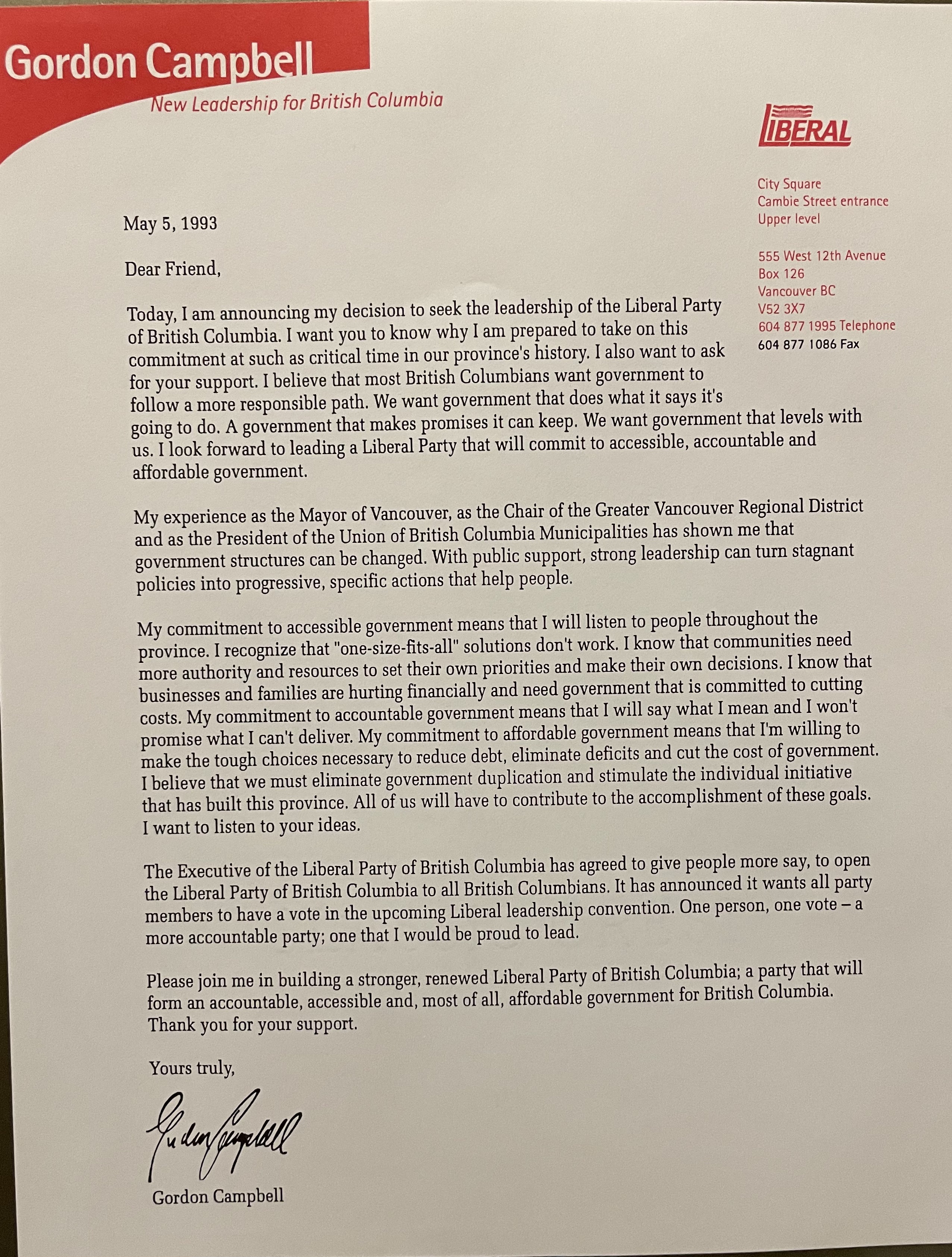

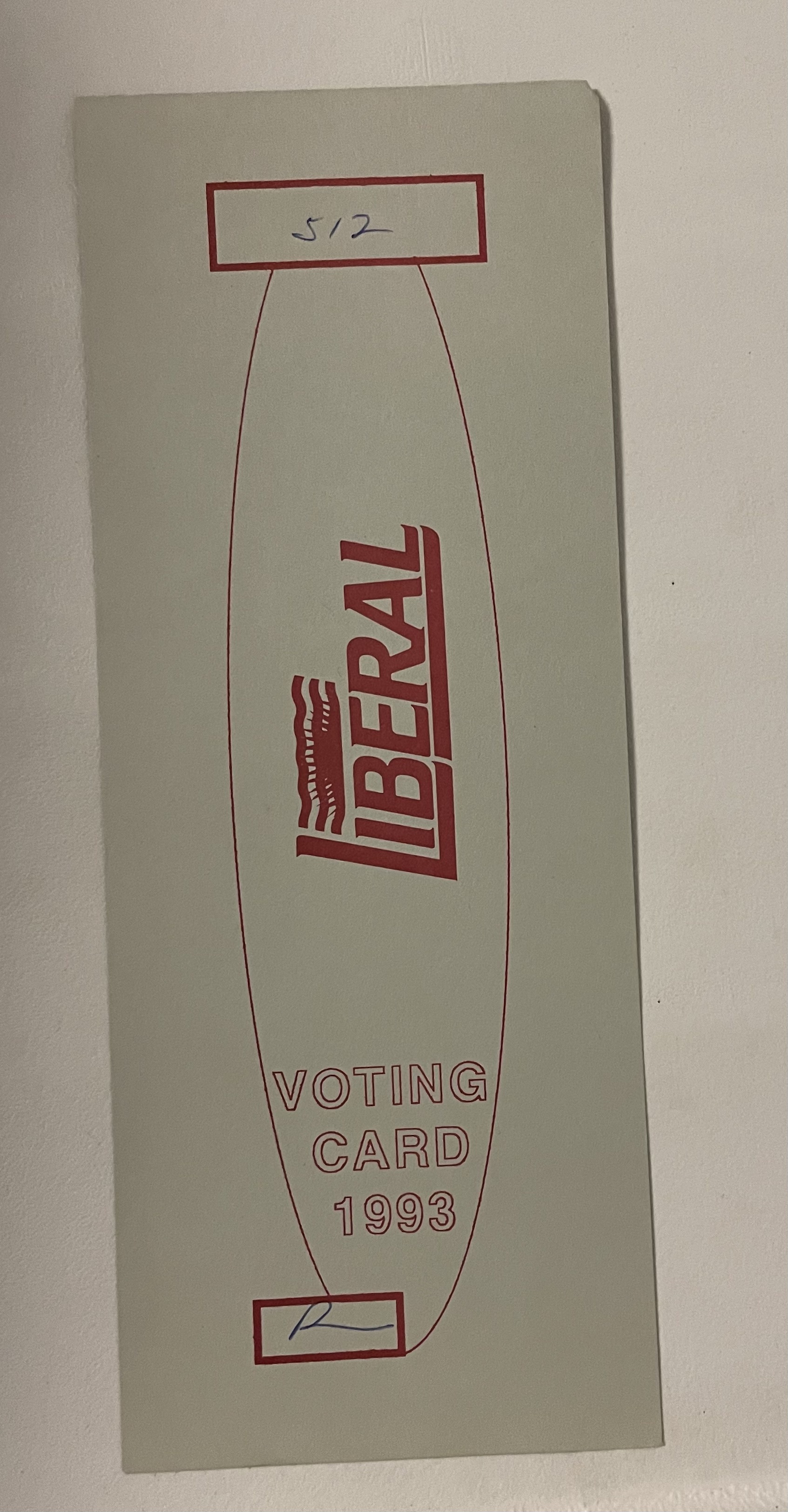






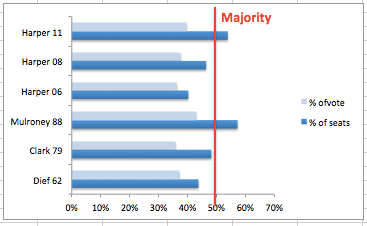
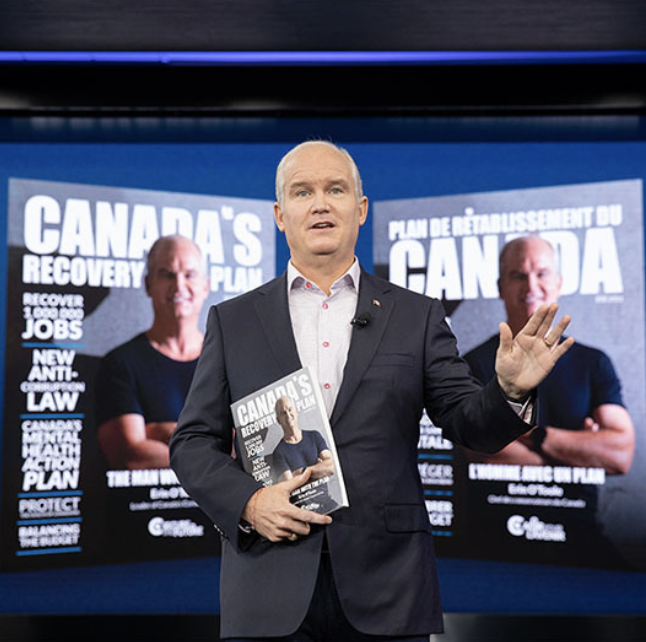
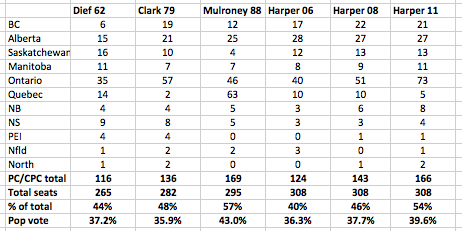



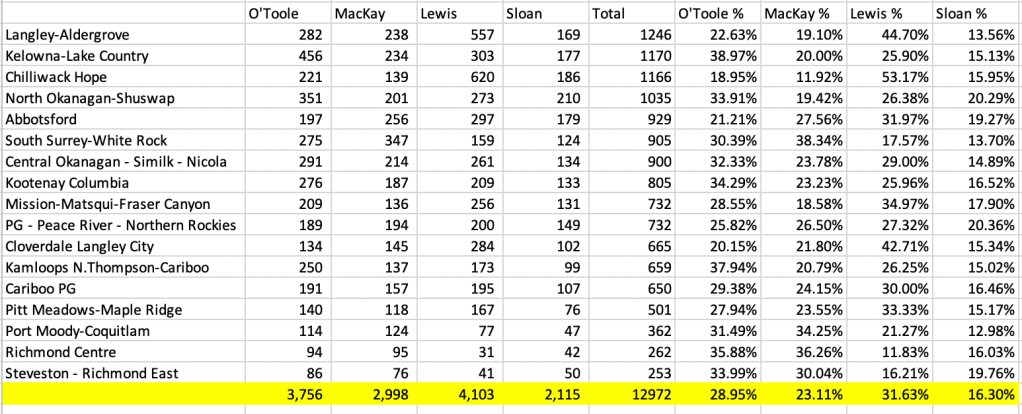
 Rosedeer
