
- It was an historically polarizing election
The UCP and NDP combined for close to 97% of the popular vote and all of the seats. This is an historic level of polarization with minor parties left in the locker room while the two major parties faced off on the electoral playing field.

The NDP’s win in 2015 was at the lowest point of polarization in the 30-year period between 1993 and 2023. In other words, the NDP won when the conservative vote was split.
BC had consecutive elections of two-party polarization in 1979 and 1983 at 94% and 95% combined, respectively, but were not quite as high as the Alberta 2023 result.
2. The UCP share of the popular vote almost matched 2019
The UCP popular vote was almost 53% and was only 2% below that of Jason Kenney’s win in 2019. While it was less efficient, regionally, it was resilient overall.
The combined vote of the PCs and WildRose parties in 2015 (52% combined from 28% PC; 24% WR) was about the same as the UCP in 2023.
Jason Kenney did the heavy lifting of unifying the PCs and Wildrose into the UCP and Danielle Smith unified the UCP base after the expiration of Kenney and fallout of a messy leadership campaign.

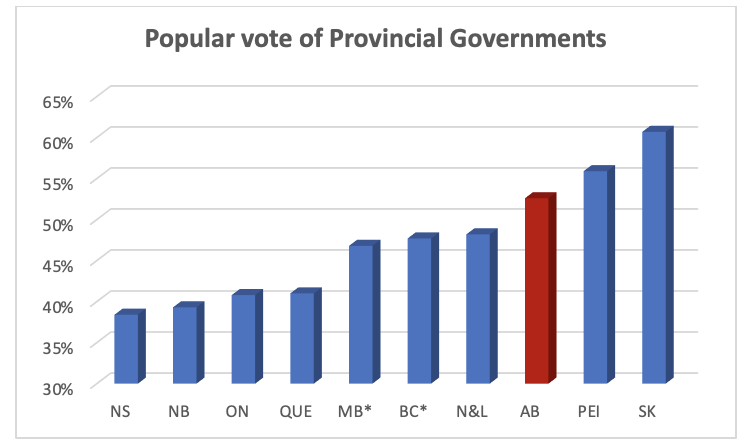
- Danielle Smith is one of only three premiers who can claim a majority of votes
Saskatchewan’s Scott Moe (60%) and PEI’s Dennis King (56%) are the only other premiers to win a majority of the popular vote. Due to presence of third parties in other legislatures, achieving a majority mandate is very difficult. BC Premier David Eby and Manitoba Premier Heather Stefanson are yet to gain their own mandate, having attained office mid-term.
- The NDP ran the table on the centre-left
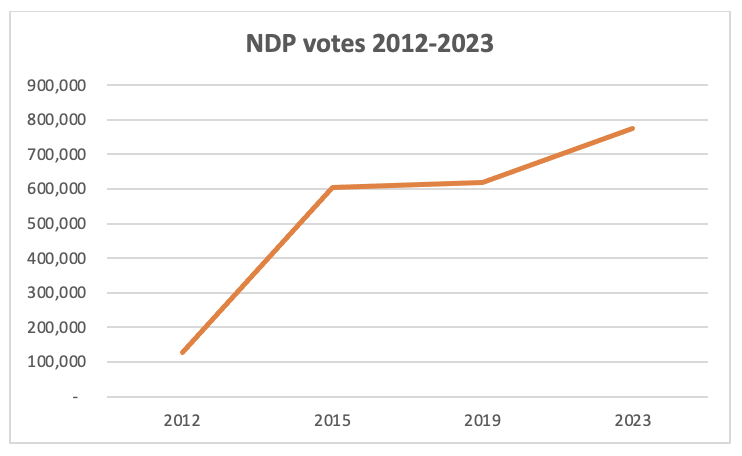
The NDP won 30% more votes in 2023 (over 775,000) than during its election win in 2015 when it won just over 600,000. 650,000 more Albertans voted NDP in 2023 than the 2012 election, just over a decade ago. Few leaders have grown and sustained a party’s vote as Rachel Notley.
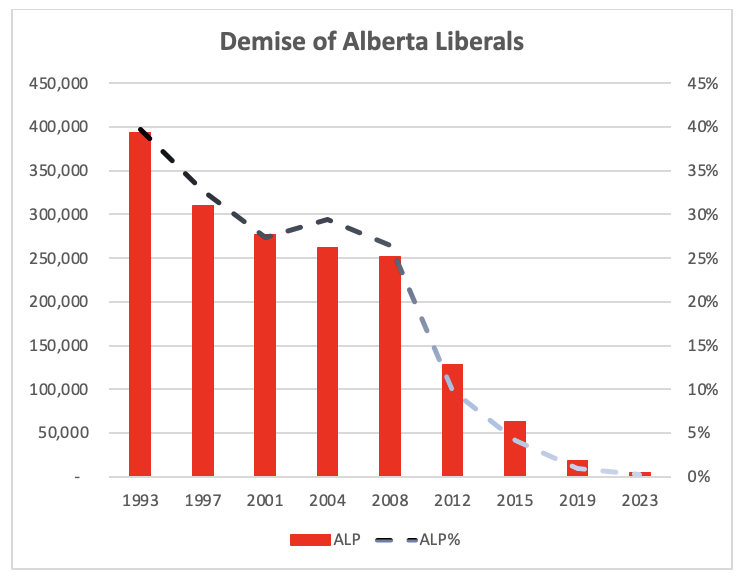
There were very few electoral table scraps left for the NDP to devour on election night. The Alberta Party collapsed, and the Alberta Liberals continued their descent to the bottom.
The Alberta Party dropped from 172,000 votes in 2019 to below 13,000 in 2023.

The demise of the Alberta Liberals has been taking place since 1993 when they contended for power. During this 30-year period, they have plummeted from almost 40% of the popular vote to 0.2%.
Next time, can the NDP count on third-parties to clear the way as they did in 2023? The NDP pathway will have to be direct next time – take away UCP votes in the battleground. Consolidation can only get them so far.
- Alberta has elected the most women premiers in general elections
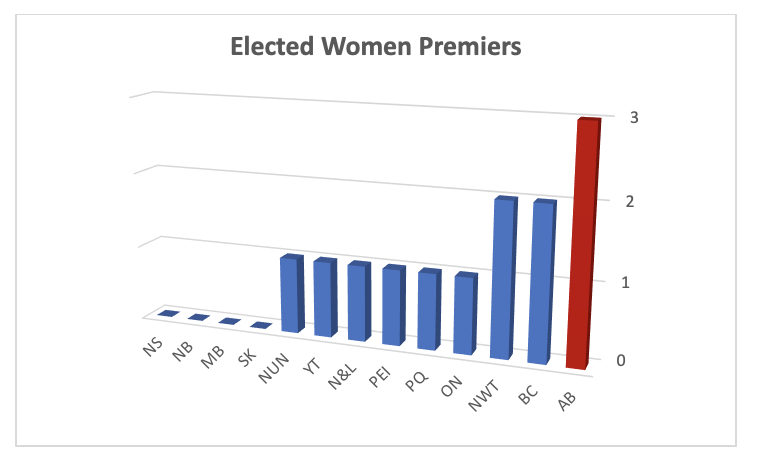
Alberta leads all provinces and territories when it comes to electing women premiers in general elections. Three different Alberta premiers – Alison Redford, Rachel Notley, and Danielle Smith – have accomplished the feat and all in the past 11 years. Christy Clark is the only premier in Canada to win twice (in 2017, she was given the opportunity to swear in a cabinet and face a confidence vote).
 Rosedeer
Did you also happen to notice an article from I think Calgary Herald this morning that provided an analysis of only 5 Calgary ridings where UCP won? It noted that total vote gap for those 5 ridings was less than 2,000 votes in favour of UCP and if that relatively small gap had been closed by NDP they would have won a majority government???? Wondering if we saw same thing….I’d call that a very slim mandate myself!
LikeLike
Yes, if you take the margin in the five closest seats, it’s not much, as is usually the case in close elections. The NDP did get close, but in spite of it being a very binary choice, having a leadership advantage, and no vote-split on the left, they still couldn’t get there. Part of that is probably structural (i.e, more people identify as conservatives than NDPers) and part of it is that they didn’t outperform the UCP in the writ period to the extent they needed to. It was winnable, though very difficult, given that UCP was holding itself together.
LikeLike
Would be interested in what you pick up along the way about the NDP GOTV effort? I imagine it must have been pretty motivated…. For NDP to win in Calgary and Edmonton though speaks volumes in my mind.
LikeLike
The NDP typically has a decent GOTV and I’m sure they were motivated, especially in Calgary. Their vote increased from 620,000 to over 775,000 in spite of declining overall turnout – total voters dropped from 1.9m to about 1.76m. The NDP challenge is that they perform better with young people, but younger people do not vote at the same rate as older people. If turnout rates were constant by age, the NDP may have won the election.
LikeLike
Luv to chat someday ftf if you are up Qualicum Beach way…
LikeLike